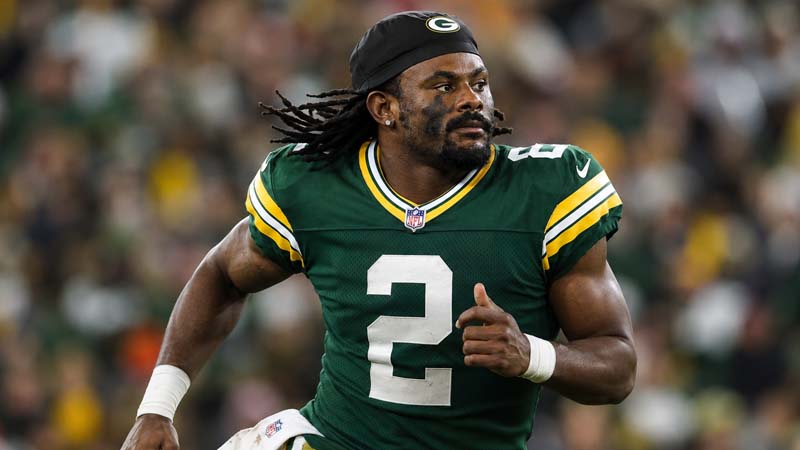
The recent multi-year agreement between the Miami Dolphins and quarterback Malik Willis has generated intense discussion across the sports landscape.
While the initial headlines focused on the eye-popping total valuation of the agreement, the underlying transaction design reveals a highly sophisticated financial strategy.
For corporate decision-makers, roster managers, and analytical observers, this contract serves as a masterclass in risk mitigation, balance-sheet flexibility, and resource allocation in a highly competitive market.
This analysis breaks down the absolute cash flow, the salary cap implications, the long-term strategic pathways, and the diverse perspectives surrounding this pivotal transaction.
Executive Financial Summary
At first glance, the headline figures suggest a massive commitment to the young quarterback.
However, analyzing the transaction through a corporate lens reveals that the cash outlay is heavily front-loaded, while the risk in the final year is eliminated.
The macro-level metrics of the transaction are outlined below:
Macro-Financial Agreement Overview (2026–2028)
| Financial Metric | Contract Value | Strategic Purpose |
|---|---|---|
| Total Face Value | $67.5 Million | Establishes market-rate positioning for a high-potential starting player. |
| Contract Duration | 3 Years | Aligns with the team’s mid-term rebuilding and evaluation timeline. |
| Average Annual Value (AAV) | $22.5 Million | Represents a highly competitive rate for modern starting quarterbacks. |
| Total Guaranteed Funding | $45.0 Million | Secures player commitment while limiting long-term financial downside. |
| Functional Commitment | 2 Years | Limits the organization’s exposure to underperformance or injury. |
| Unfunded Team Option Year | 2028 | Serves as an escape hatch or transition point to a long-term extension. |
This structure ensures that while the player receives immediate capital security, the franchise retains the ultimate leverage to pivot if the on-field results do not justify the third-year expenditure.
Year-by-Year Cash Flow and Amortization Ledger
To understand how this agreement impacts the team’s active operational budget, we must distinguish between actual cash paid to the player and the salary cap hit charged against the league-mandated payroll limit.
Thanks to the financial resources of team ownership, the franchise was able to pay a massive signing bonus immediately upon execution, which dramatically lowers the year-one cap footprint.
The detailed annual breakdown of cash disbursements and cap accounting is below:
Year-by-Year Cash Flow vs. Salary Cap Ledger
| League Year | Base Salary (Guaranteed) | Signing Bonus (Upfront) | Special Roster Bonuses | Total Annual Cash Paid | Salary Cap Charge | Accounting Status |
|---|---|---|---|---|---|---|
| 2026 | $1.25 Million (Fully Guaranteed) | $22.25 Million (Fully Paid Upfront) | $0.00 | $23.50 Million | $5.67 Million | Fully Guaranteed. Low cap footprint allows team to absorb legacy obligations. |
| 2027 | $21.50 Million (Fully Guaranteed) | $0.00 | $0.00 | $21.50 Million | $21.50 Million plus Prorated Bonus | Fully Guaranteed. Aligns with a period of projected payroll health. |
| 2028 | $20.50 Million (Non-Guaranteed) | $0.00 | $2.00 Million (Due March 2028) | $22.50 Million | $22.50 Million plus Prorated Bonus | Non-Guaranteed. Functionally an option year with zero dead-cap penalty. |
| Totals | $23.25 Million | $22.25 Million | $2.00 Million | $67.50 Million | Variable Amortization | $45.0 Million Fully Guaranteed. |
The Role of Capital Liquidity in Year One
A key driver of this transaction is the upfront capital provided by franchise owner Stephen Ross, who paid the $22.25 million signing bonus immediately upon signature.
In professional sports accounting, a signing bonus is paid immediately but is permitted to be amortized evenly over the length of the contract for cap calculation purposes.
Because of this mechanism, the team is able to limit the player’s 2026 cap footprint to just $5.67 million.
This low-cap entry point is vital because it allows the team to digest the heavy dead-cap burden associated with the departure of former quarterback Tua Tagovailoa without crippling their ability to field a competitive roster.
The Architecture of Risk: Guaranteed vs. Non-Guaranteed Allocation
A critical mistake made by casual observers is judging a professional sports contract solely by its total face value. In reality, guaranteed money is the only true measure of an organization’s commitment to a player.
By structuring this transaction with $45 million in total guarantees, the front office has created a distinct dividing line between the first two years of the contract and the final year.
The distribution of guaranteed capital is mapped below:
Table 3: The Guaranteed Cash Allocation Matrix
| Contract Year | Total Scheduled Cash | Guaranteed Amount | Non-Guaranteed Amount | Risk Exposure Status |
|---|---|---|---|---|
| Year 1 (2026) | $23.50 Million | $23.50 Million | $0.00 | 100% Guaranteed. Zero team financial risk mitigation available in year one. |
| Year 2 (2027) | $21.50 Million | $21.50 Million | $0.00 | 100% Guaranteed. Roster spot is secured by the fully guaranteed base salary. |
| Year 3 (2028) | $22.50 Million | $0.00 | $22.50 Million | 0% Guaranteed. The franchise holds complete leverage and a clean exit path. |
| Contract Lifecycle | $67.50 Million | $45.00 Million | $22.50 Million | 66.7% Guaranteed Overall. Protected downside for the organization. |
The 2028 Escape Hatch
As shown in the matrix above, the final year of the agreement (2028) contains zero guaranteed dollars.
The $20.5 million base salary and the $2 million March roster bonus are entirely contingent on the player remaining on the roster past the start of the 2028 league year.
This means that if the player underperforms, suffers chronic physical setbacks, or simply does not fit the long-term vision of the coaching staff, the organization can terminate the agreement before March 2028.
Doing so would incur zero active salary obligations for that season, freeing up massive resources for alternative investments. Consequently, this deal is functionally a two-year, $45 million trial period.
Strategic Implications for Roster Engineering
Beyond the balance sheet, this contract reflects a calculated organizational philosophy spearheaded by the front office regime under “Sully”.
Rather than tying the hands of the franchise, the transaction is engineered to facilitate multiple paths toward building a championship-caliber team.
The strategic pathways established by this contract design are outlined below:
Strategic Pathways and Roster Outcomes
| Roster Strategy | Operational Execution | Long-Term Organizational Benefit |
|---|---|---|
| The Bridge Option | Establish the player as a highly capable starting quarterback for the 2026 and 2027 seasons. | Keeps the team competitive in the short term while stabilizing the offense. |
| The Draft Buffer | Select a premier rookie quarterback in the 2027 draft class while the veteran player starts. | Allows the incoming rookie to acclimate to the professional system without immediate pressure. |
| The Long-Term Pivot | If the veteran thrives, extend his stay beyond 2027 with a team-friendly extension. | Secures a proven starter at a predictable rate as league-wide salaries rise. |
| The Clean Exit | If the experiment fails, exercise the escape hatch before the 2028 league year. | Clears $22.5 million in cash from the books with zero lingering financial liability. |
The Green Bay Precedent
A key justification for this structure is the developmental model pioneered by the Green Bay Packers.
Sports analysts note how Green Bay successfully developed prominent quarterbacks by allowing draft picks to spend valuable time acclimating to the professional level behind established starters before being thrust into active game action.
By securing a highly athletic, high-ceiling starting option on a reasonable two-year financial footprint, the Dolphins’ front office has created a perfect developmental environment.
They are fully empowered to target a young signal-caller in the 2027 draft without the operational burden of starting them on day one.
Fan Sentiment and Market Debate
Very few transactions in recent memory have split a local fan base as sharply as this quarterback signing. The community’s response highlights the classic tension between aggressive rebuilding and pragmatic competitiveness.
The primary arguments from both sides of the debate are organized below:
Analytical Breakdown of the Fan Debate
| Perspective | Core Supporting Argument | Potential Risk / Critique |
|---|---|---|
| The Optimists (“Sully Cooked”) | • Highly favorable year-one cap structure ($5.67M) leaves ample room to sign supporting talent.• Maintains complete flexibility to draft a top-tier rookie quarterback in 2027.• Minimal long-term risk due to the zero-guarantee structure in 2028. | • Represents a significant amount of guaranteed money ($45M) for a player who has yet to establish consistent starting credentials. |
| The Critics (The Fitzpatrick Trap) | • An average-level performance may result in a mediocre 6-to-8 win record, which places the team out of range for a top draft pick.• Mirrors past errors where stop-gap veteran options disrupted high-value draft positioning.• The team should have fully committed to a young prospect immediately. | • Fails to recognize that tanking completely can damage team culture, alienate existing elite talent, and destroy organizational value. |
This polarization is typical of professional sports franchises navigating a transition period. While skeptics fear the team will remain in mediocrity, supporters point out that having multiple options is always superior to placing all organizational resources into a single unproven basket.
Concluding Assessment
The three-year, $67.5 million contract signed by Malik Willis is a classic example of modern corporate sports engineering.
By leveraging the liquid capital of team ownership to fund a substantial upfront signing bonus, the front office has successfully navigated a difficult transitional period dominated by legacy dead-cap commitments.
While the player receives an immediate, life-altering financial guarantee of $45 million over the first two years, the franchise retains the ultimate leverage.
If the quarterback demonstrates elite development, the franchise has secured a bargain starting asset.
If he struggles, the team can execute a clean break in 2028 and pivot to a newly drafted successor without lingering long-term financial consequences.
Ultimately, this contract is not a reckless gamble, but a highly calculated, structured business option designed to keep the franchise competitive today while preserving the strategic flexibility required to build for tomorrow.