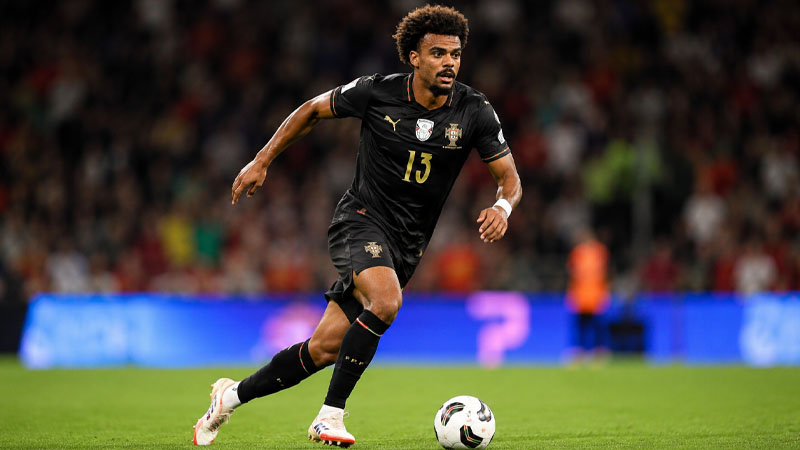
Renato Veiga has rapidly emerged as one of the most versatile and intellectually grounded talents in modern European football.
While his physical presence and tactical intelligence on the pitch are frequently discussed by analysts, his off-field background is equally compelling.
For fans and researchers looking into the roots of this rising star, understanding Renato Veiga’s ethnicity provides essential context for his identity.
Born into a lineage of professional athletes, Veiga represents a unique blend of cultures, carrying a heritage that spans from the Atlantic islands of Cape Verde to the historical streets of Lisbon, Portugal.
Renato Veiga Ethnicity and Cultural Roots
The question of Renato Veiga’s ethnicity is central to his identity as a modern athlete. He is of Cape Verdean ethnicity, a heritage that defines his familial roots and cultural outlook.
While he was born in Lisbon, Portugal, his connection to the Cape Verdean archipelago is profound, inherited directly from his parents who are of Cape Verdean descent.
This dual identity allows him to navigate different cultural spheres with ease, a trait that is common among the children of the Lusophone diaspora living in Portugal.
The Cape Verdean Heritage
The Cape Verdean descent of Renato Veiga is a fundamental part of his personal history. Cape Verde, a group of islands off the coast of West Africa, has a long-standing historical and cultural relationship with Portugal.
Many individuals of Cape Verdean heritage have become iconic figures in Portuguese society, particularly in sports and the arts.
For Veiga, this ethnicity is not just a biological fact but a lived experience that connects him to a broader community of Cape Verdeans who have made Portugal their home while maintaining strong ties to their ancestral islands.
Dual Citizenship and National Identity
Beyond his ethnic background, Renato Veiga holds dual citizenship, being a citizen of both Portugal and Cape Verde. He was born in Lisbon, which naturally grants him Portuguese nationality by birth.
However, his parents’ heritage ensures he remains eligible for Cape Verdean citizenship as well. This legal duality reflects his multifaceted upbringing, where the traditions of his Cape Verdean home life blended seamlessly with the Portuguese environment of his birthplace.
Holding both passports is a testament to his status as a “global citizen” within the world of professional sports.
A Family Legacy of Professional Football
To understand Renato Veiga, one must look at the blueprint provided by his family. His journey into the world of elite football was not an accident but a continuation of a professional legacy.
His father, Nélson Veiga, played a pivotal role in shaping Renato’s career and his early exposure to the requirements of the professional game.
This familial foundation provided Renato with an early understanding of the discipline, sacrifice, and cultural adaptability required to succeed at the highest levels of the sport.
The Influence of Nélson Veiga
Nélson Veiga was himself a Lisbon-born professional footballer who carved out a respected career in the sport. While he shared a similar birthplace to his son, Nélson’s international career followed a different trajectory.
He chose to represent the Cape Verde national team on the international stage, honoring his heritage through athletic service.
As a father and mentor, Nélson provided Renato with a firsthand look at the life of a professional athlete, instilling in him the values necessary to navigate the complexities of a career that often involves moving across borders and adapting to new environments.
Choosing the Portugal National Team
Despite his father’s history with the Cape Verde national team and his own eligibility to represent the islands, Renato Veiga has chosen a different path for his international career. He currently plays for the Portugal national team.
This decision highlights the common dilemma faced by many dual-nationality athletes in the modern era.
While he remains proud of his Cape Verdean ethnicity, his development within the Portuguese football system and his birth in Lisbon have led him to commit his talents to the nation of his birth.
This choice is often a reflection of where a player feels their professional development and sporting opportunities are best aligned.
The Nomadic Childhood and Multilingual Identity
Renato Veiga’s upbringing was anything but conventional. Because of his father’s professional football career, the family lived a nomadic lifestyle, moving to different countries as Nélson signed new contracts.
This exposure to various cultures at a young age had a transformative effect on Renato, shaping him into a highly adaptable and linguistically gifted individual.
This period of his life was crucial in developing the “soft skills” that now complement his physical abilities on the pitch.
| Language | Context of Acquisition |
|---|---|
| Portuguese | Native language, spoken at home and in his birthplace. |
| English | Developed through international schooling and global football environments. |
| French | Learned during his time living in Francophone regions or through diverse teammates. |
| Spanish | Acquired during his travels or professional stints in relevant regions. |
| Arabic | Learned during his childhood years spent living in Morocco. |
Growing Up Across Three Continents
The geography of Renato’s childhood was diverse, spanning Portugal, Cyprus, and Morocco. Living in Cyprus and Morocco, in particular, exposed him to social structures and cultural norms that are vastly different from those in Western Europe.
In Morocco, he was immersed in a society where Arabic and French are prevalent, while Cyprus offered a Mediterranean cultural experience.
These moves were not just changes in location; they were deep dives into different ways of life, forcing a young Renato to learn how to communicate and integrate quickly.
The Strategic Value of Five Languages
Today, Renato Veiga is fluent in five languages: Portuguese, English, French, Spanish, and Arabic. In the high-stakes environment of a modern football locker room, this linguistic range is a massive strategic advantage.
He can communicate directly with teammates from almost every corner of the globe without the need for a translator.
Whether discussing tactics with a coach in French or bonding with a teammate in Arabic, his ability to speak five languages fosters team cohesion and makes him a natural leader.
This polyglot status is a direct result of his multicultural upbringing and his family’s willingness to embrace a global lifestyle.
Professional Trajectory and Adaptability
Renato Veiga’s career has been marked by a willingness to step outside his comfort zone, a trait likely developed during his multi-country childhood. His ability to adapt to different leagues and tactical systems is a hallmark of his professional profile.
This adaptability is rooted in the fact that he has been a “foreigner” multiple times in his life, beginning with his moves to Cyprus and Morocco as a child.
Tactical Versatility as a Cultural Trait
Observers often note that Veiga possesses a tactical maturity beyond his years. This can be attributed to his exposure to different styles of football in the various countries where he lived and trained.
Different nations prioritize different aspects of the game—some focus on physicality, others on technical precision or tactical discipline.
By experiencing these various footballing philosophies early on, Veiga developed a versatile “footballing IQ” that allows him to excel in multiple positions, whether in midfield or defense.
The Modern Diaspora Athlete
Renato Veiga is a representative of a new generation of athletes who are the products of global migration and the professionalization of sports families.
His story is not just about football; it is about the way migration patterns within the Lusophone world create individuals with rich, complex identities.
He carries the history of Cape Verde and the opportunities of Portugal, combining them into a persona that is uniquely suited for the globalized world of the 21st century.
His success serves as an inspiration for other youth players in the diaspora who balance multiple cultural allegiances.
Frequently Asked Questions
Where was Renato Veiga born?
Renato Veiga was born in Lisbon, the capital city of Portugal.
What is Renato Veiga’s ethnicity?
He is of Cape Verdean ethnicity. Both of his parents are of Cape Verdean descent.
Does he speak more than one language?
Yes, he is a polyglot who is fluent in five languages: Portuguese, English, French, Spanish, and Arabic.
Why does he play for Portugal instead of Cape Verde?
While he is eligible for Cape Verde through his parents, he was born in Portugal and grew up in the Portuguese football system, ultimately choosing to represent his birth nation.
Who is Renato Veiga’s father?
His father is Nélson Veiga, a former professional footballer who represented the Cape Verde national team.
The Future of a Multicultural Icon
As Renato Veiga continues to grow in his career, his multicultural background will remain a defining feature of his public persona. He is more than just a footballer; he is a bridge between cultures and a testament to the benefits of a diverse upbringing.
His ability to speak five languages and his deep connection to both Portugal and Cape Verde make him a unique figure in the sport.
In an era where football is increasingly global, players like Veiga, who can move seamlessly between different worlds, are the ones who will define the future of the game.
His journey from a nomadic childhood in Morocco and Cyprus to the elite stadiums of Europe is a story of resilience and adaptability. For fans, his ethnicity and heritage provide a deeper layer of meaning to his performances on the pitch.
Whether he is defending for his club or representing the Portugal national team, he carries with him the legacy of his father and the pride of his Cape Verdean roots. Renato Veiga is, in every sense, a modern athlete for a global age.