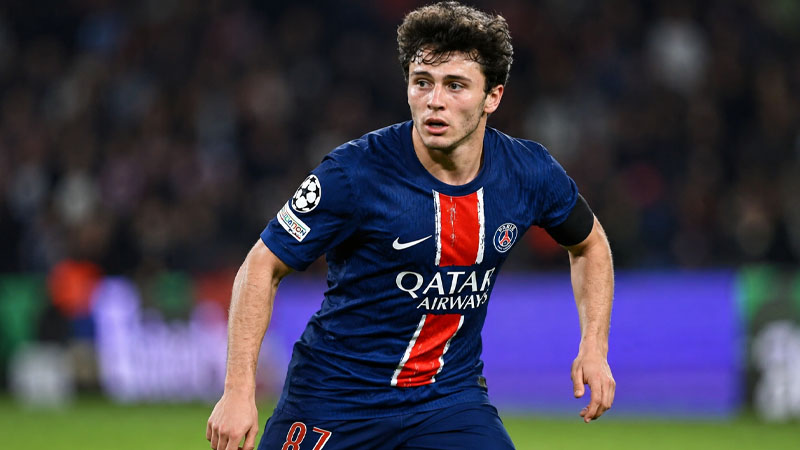
The acquisition of João Neves in August 2024 signaled a definitive shift in the recruitment philosophy of the reigning French champions.
Moving away from the era of individualistic superstars, the club identified the nineteen-year-old Portuguese international as the primary engine for a new, youth-centric tactical system.
This strategic investment required a sophisticated financial package exceeding €60 million to secure his services from one of Europe’s most prestigious talent developers.
By analyzing the base fees, performance-related variables, and long-term salary commitments, we can uncover the true economic scale of this landmark midfield reinforcement.
The Fundamental Transfer Structure
The negotiation for João Neves was characterized by a significant gap between the initial asking price and the final agreed-upon valuation. Early discussions were dominated by a formidable €120 million release clause embedded in his previous contract.
However, strategic financial pressures and the player’s clear desire to join the project in Paris led to a compromise that benefited both organizations.
The final agreement was structured into two primary tiers: a guaranteed fixed amount and a series of conditional bonuses designed to reflect the player’s development and the team’s competitive success.
| Fee Component | Value in Euros (€) | Value in British Pounds (£) | Value in US Dollars ($) |
|---|---|---|---|
| Initial Fixed Base Fee | €59.9 Million – €60 Million | £50 Million – £50.5 Million | ~$64.9 Million |
| Performance Add-ons | €10 Million | £8.4 Million | ~$10.8 Million |
| Potential Total Expenditure | €69.9 Million – €70 Million | £58.4 Million – £59 Million | ~$75.7 Million |
The Strategic Inclusion of Renato Sanches
The deal was not a simple cash-for-player transaction. To facilitate the movement and optimize the financial books of both clubs, the agreement included a secondary movement involving Portuguese midfielder Renato Sanches.
Sanches transitioned back to his former club on a season-long loan arrangement that included a specific option for a permanent transfer.
This inclusion served multiple purposes:
- It reduced the immediate cash burden for the buying club.
- It provided the selling club with an experienced, ready-made replacement.
- It allowed for a more flexible accounting treatment of the overall squad valuation.
Contractual Longevity and Financial Commitment
Beyond the initial acquisition cost, the long-term financial commitment to João Neves is substantial. The club secured the midfielder on a five-year contract, which is scheduled to conclude on June 30, 2029.
This duration reflects the club’s confidence in Neves as a generational talent capable of anchoring the midfield for the remainder of the decade.
The salary profile for Neves is tiered to reflect his status as a key first-team starter while remaining within the club’s revised sustainable wage structure.
| Financial Metric | Estimated Value (EUR) | Estimated Value (GBP) |
|---|---|---|
| Gross Weekly Salary | €174,808 | ~£146,000 |
| Gross Annual Salary | €9,090,000 | ~£7,600,000 |
| Remaining Contract Value (4 Years) | €36,360,000 | ~£30,400,000 |
| Total 5-Year Contract Commitment | €45,450,000 | ~£38,000,000 |
The Evolution of Market Valuation
While the total investment—combining the potential €70 million transfer fee and the €45.45 million salary commitment—exceeds €115 million, early data suggests this was a highly efficient use of capital. Since his arrival in the French capital, Neves’ market value has seen an unprecedented surge.
Market trackers and analytical models currently evaluate the player’s worth far beyond his initial purchase price. By June 2026, his estimated market valuation reached a staggering €140 million.
This represents a more than 130% increase over the initial €60 million base fee in less than two years of development.
For a club aiming for financial sustainability, acquiring an asset for €60 million that is now worth double that amount is the hallmark of a successful elite-level recruitment strategy.
Tactical Dividends: Why the Price Tag was Justified
The high price tag was not merely for potential but for proven technical proficiency.
Neves arrived as a “passionate” and “determined” competitor who had already demonstrated his ability to perform under pressure during his 75 appearances for his boyhood club and his involvement in major international tournaments like Euro 2024.
His role in the new project is multifaceted:
- Technical Hub: He serves as the primary distributor in the middle third, facilitating the transition from defense to attack.
- Defensive Solidity: Despite his age, his reading of the game allows him to intercept play and maintain team balance.
- Cultural Shift: His signing represents the club’s move toward “players who fight for the jersey,” as noted by club leadership during his unveiling.
Comparative Analysis: Ligue 1 and Global Market Context
In the broader context of the global transfer market, the fee for Neves is consistent with the rising costs of elite young midfielders. However, when compared to recent high-profile departures from the club, the deal highlights a more disciplined financial approach.
- The Post-Mbappé Context: Following the departure of major stars to clubs like Real Madrid, the club had significant headroom in their wage bill.
- Youth Premium: Clubs are increasingly willing to pay a premium for players under the age of 21 who have already accumulated significant minutes in top-tier European competitions and the Champions League.
The Financial Roadmap: 2024-2029
The following table outlines the projected financial journey of João Neves at the club, showcasing the intersection of his age, experience, and earnings.
| Season | Age | Club | Primary Goal | Estimated Gross Salary (EUR) |
|---|---|---|---|---|
| 2024-2025 | 20 | PSG | Initial Integration | €9,090,000 |
| 2025-2026 | 21 | PSG | Core First-Team Pillar | €9,090,000 |
| 2026-2027 | 22 | PSG | European Leadership | €9,090,000 |
| 2027-2028 | 23 | PSG | Peak Performance | €9,090,000 |
| 2028-2029 | 24 | PSG | Contract Renewal/Prime | €9,090,000 |
Enhanced FAQ: Financial and Career Details
What was the exact base fee paid to Benfica?
The initial fixed fee was €59.9 million (approximately £50 million).
How much can the total cost rise with bonuses?
The deal includes €10 million in performance-related add-ons, potentially bringing the total transfer expenditure to roughly €70 million.
What are João Neves’ current weekly and annual earnings?
He earns an estimated gross weekly salary of €174,808, which totals €9,090,000 annually, excluding bonuses.
When does his current contract expire?
His current agreement is set to expire on June 30, 2029.
What is his current market valuation?
As of June 2026, his market value is estimated at €140 million, reflecting his rapid development in the French top flight.
How many international appearances has he made?
By mid-2026, Neves had earned 23 caps for the Portugal national team and scored 4 goals.
What was the role of Renato Sanches in this deal?
Renato Sanches moved to Benfica on a season-long loan with an option to buy as part of the structured negotiations for Neves.
Strategic Conclusion: A Masterclass in Modern Recruitment
The acquisition of João Neves is a case study in balancing high-level competitive needs with long-term fiscal responsibility.
While a total package approaching €70 million for a teenager is a substantial outlay, the subsequent doubling of his market value to €140 million justifies the initial risk.
The club has successfully secured a player who embodies the “passionate” and “determined” spirit required for their new era.
By locking in a five-year commitment at a fixed salary of €9.09 million per year, the organization has mitigated the risk of future wage inflation while ensuring they possess one of the most valuable midfield assets in world football.
As the club continues its pursuit of domestic dominance and European glory, the “£50 million” investment in João Neves is increasingly looking like one of the most astute pieces of business in recent Ligue 1 history.