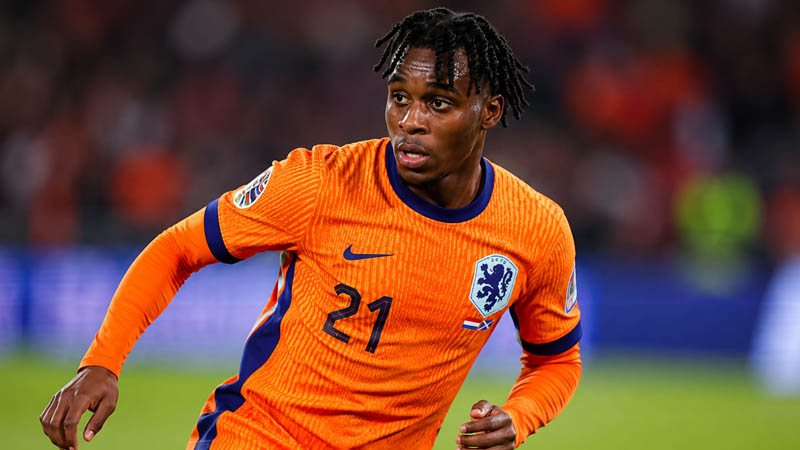
Jeremie Frimpong is perhaps the most polarizing “defender” in modern football, sparking intense debate among analysts regarding his true ceiling. Is he a generational talent or a niche specialist who requires a perfect ecosystem to thrive?
Since his meteoric rise at Bayer Leverkusen and his high-profile move to Liverpool in 2025, his tactical profile has been scrutinized under the brightest lights.
He breaks the mold of a traditional full-back, offering offensive output that rivals elite wingers while harboring defensive deficiencies that challenge conventional coaching.
Understanding his true value requires looking beyond basic highlights to examine his specific tactical requirements.
The Statistical Foundation: Career Trajectory and Metrics
To evaluate how good Jeremie Frimpong actually is, one must first look at the raw data defining his career across three major European leagues.
His journey from Celtic to Leverkusen, and eventually to the Premier League, reveals a player whose output is heavily dictated by the offensive freedom he is afforded by his coaching staff.
While his numbers at Leverkusen were record-breaking for a wide defender, his transition to a more rigid system at Liverpool has seen a notable dip in productivity.
This statistical shift highlights the importance of system-fit for his specific profile. Below is a comprehensive breakdown of his career performance as of June 2026:
| Club / Level | Appearances | Goals | Assists | Key Achievement |
|---|---|---|---|---|
| Bayer Leverkusen (2021–2025) | 190 | 30 | 40 | Bundesliga (23/24), DFB-Pokal |
| Celtic (2019–2021) | 51 | 3 | 8 | Scottish Premiership (19/20) |
| Liverpool (2025–2026) | 32 | 1 | 2 | FA Community Shield (2025) |
| Netherlands (International) | 8 | 1 | 2 | Debut in 2023 |
| Total Career | 281 | 35 | 54 | 5 Major Trophies |
The Leverkusen Blueprint: A Masterclass in Tactical Optimization
The peak of Frimpong’s powers was undoubtedly realized under Xabi Alonso at Bayer Leverkusen, where the tactical structure was specifically engineered to hide his flaws and amplify his world-class speed. In this environment, Frimpong was not a right-back but a high-functioning offensive outlet.
The Left-Sided Buildup Strategy
Leverkusen’s success relied on a deliberate tactical imbalance designed to create space for Frimpong’s verticality.
The team’s buildup was heavily weighted toward the left flank, utilizing the technical proficiency of Alejandro Grimaldo, Granit Xhaka, and Florian Wirtz to circulate possession and attract opposition pressure.
As the defending team shifted their block to the left to contain this creative hub, Leverkusen would rapidly switch play to the right.
This maneuver isolated Frimpong against a lone defender in vast open space, allowing him to use his 36.18 km/h top speed to devastate the opposition’s backline.
The Freedom of the Wing-Back Role
Within Alonso’s 3-4-2-1 system, Frimpong was liberated from traditional defensive duties, often being encouraged to “cheat” high and wide even during defensive transitions. He rarely dropped into a flat back five unless the team was under sustained, heavy pressure.
This positioning meant he was effectively a winger who started from a deeper base, allowing him to build up momentum and exploit space more effectively than he could as a static forward.
By removing the burden of defensive reading in deep areas, Leverkusen allowed Frimpong to focus entirely on his primary strength: creating chaos in the final third.
The Offensive Arsenal: Verticality and Technical Refinement
When analyzing Frimpong’s attacking threat, he offers a level of goal involvement that few full-backs in history can match.
His verticality and aggressive runs in behind make him a constant threat in advanced areas, often outperforming even creative benchmarks like Trent Alexander-Arnold in direct scoring metrics.
Elite Ball Carrying and 1v1 Explosiveness
Frimpong profiles as one of the most adventurous and explosive ball carriers in Europe, averaging four dribbles per 90 minutes with a 60% success rate.
His agility and low center of gravity allow him to navigate tight spaces, although he is most effective when starting from deep and building speed.
Interestingly, his dribbling style is described as having a “retro” feel, as he prefers to hug the touchline and stretch the play rather than inverting into central areas like many modern full-backs.
This width creates a massive outlet for his team, forcing opposition defenses to expand and leaving gaps in the middle.
Clinical Finishing and High-Volume Crossing
Unlike most defenders who look for a cross as a first resort, Frimpong is a genuine goal threat who finds himself in one-on-one situations with the goalkeeper frequently.
He possesses a trademark finish, often arriving at narrow angles before finessing a shot across the keeper with his weaker left foot or placing it firmly with his right.
When he does cross, he is a high-volume contributor, averaging nearly five crosses per 90. His deliveries are typically low, fast, and aimed at the near post, specifically designed to catch defenders off guard and find late-arriving runners.
The Defensive Paradox: Analyzing the Tactical Frailties
Despite his physical gifts, Frimpong’s defensive profile is riddled with inconsistencies that make him a high-risk option in a traditional four-man defensive line.
This “paradox” is the primary reason why his international career and his move to the Premier League have faced significant hurdles.
1v1 Isolation and Passive Defending
On paper, Frimpong’s lateral quickness should make him a formidable 1v1 defender, but in practice, he often struggles with timing and body positioning.
He has a noted tendency to be passive or “flat-footed” in defensive engagements, making him susceptible to simple body feints or nutmegs.
Unlike physical defenders who use their strength to “eat up ground” when tracking back, Frimpong relies almost entirely on his recovery pace, which can be bypassed by technically sharp wingers who understand how to close angles and shield the ball.
Aerial Vulnerabilities and Far-Post Risks
One of the most glaring weaknesses in Frimpong’s game is his lack of aerial presence. His aerial duel success rate sits below 30%, which is remarkably poor even for a smaller full-back.
Beyond just his lack of size, he struggles with the timing of his jumps and often mistimes the flight of the ball. This makes him a primary target for opposition teams in the Premier League, who often look to exploit full-backs via back-post crosses.
Without a dominant center-back like Ibrahima Konaté or Virgil van Dijk to cover these zones, Frimpong’s side of the pitch can become a major defensive liability.
The Liverpool Challenge: Adapting to Arne Slot’s Rigidity
Frimpong’s €35 million move to Liverpool in 2025 was seen as a tactical experiment that has, thus far, yielded mixed results.
Under Arne Slot’s 4-3-3 system, Frimpong has found himself caught between being a right-back and a right-winger, failing to find the same freedom he enjoyed in Germany.
The Conflict of System Alignment
The transition from a wing-back role to a traditional right-back in a back-four has exposed Frimpong’s defensive limitations.
At Liverpool, he is required to be more involved in the buildup phase—an area where he lacks the vision and passing range of a player like Trent Alexander-Arnold.
While Alexander-Arnold averages 10 long passes per game, Frimpong’s game is built on short, sharp combinations. This lack of creative range from deep means that if he cannot find space to run into, his influence on the game diminishes significantly.
The Impact on Mohamed Salah
One unexpected benefit of Frimpong’s arrival at Liverpool has been his impact on Mohamed Salah. Because Frimpong naturally hugs the touchline, it allows Salah to move into central areas, effectively playing as a second striker.
This shift reduces the “hard yards” Salah has to cover on the flank, potentially extending the veteran’s career by keeping him closer to the goal.
However, this tactical gain comes at the cost of a massive defensive burden on the right-sided center-back and midfielders, who must constantly cover the massive gaps Frimpong leaves behind during his frequent attacking ventures.
Final Verdict: A World-Class Specialist
How good is Jeremie Frimpong? The answer depends entirely on the jersey he is wearing and the system he is asked to play.
He is not a “generational full-back” who can drop into any team and dominate; he is, however, a world-class wing-back in a bespoke attacking system.
His elite pace (36.18 km/h) and goal-scoring instincts make him a devastating transitional weapon, but his defensive passivity and aerial weaknesses are significant hurdles for any coach wanting to play a traditional four-man defense.
For Frimpong to reach his maximum potential, a team must be willing to reinvent their entire defensive structure to accommodate his unique, offensive-first profile.
Frequently Asked Questions
Is Jeremie Frimpong better than Trent Alexander-Arnold?
In terms of direct goal-scoring threat and vertical explosiveness, Frimpong statistically outperforms Alexander-Arnold. However, Alexander-Arnold remains a significantly superior playmaker with a much higher volume of long passes and central influence.
Why was Frimpong left out of the 2026 World Cup squad?
His omission from the Dutch squad was largely due to a combination of muscle injuries during his debut season at Liverpool and tactical concerns regarding his lack of defensive tracking in a back-four system.
What is Frimpong’s best position?
He is most effective as a right wing-back in a 3-4-2-1 or 3-5-2 formation. This allows him to focus on his offensive strengths while being shielded defensively by three central defenders.
How fast is Jeremie Frimpong?
Frimpong recorded a top speed of 36.18 km/h during the 2025–26 Premier League season, making him one of the fastest players in the league.
Can he play as a pure winger?
While he has the pace of a winger, he is often more predictable in higher starting positions because he favors going down the line on his right foot and lacks the skill variety of a traditional elite winger.