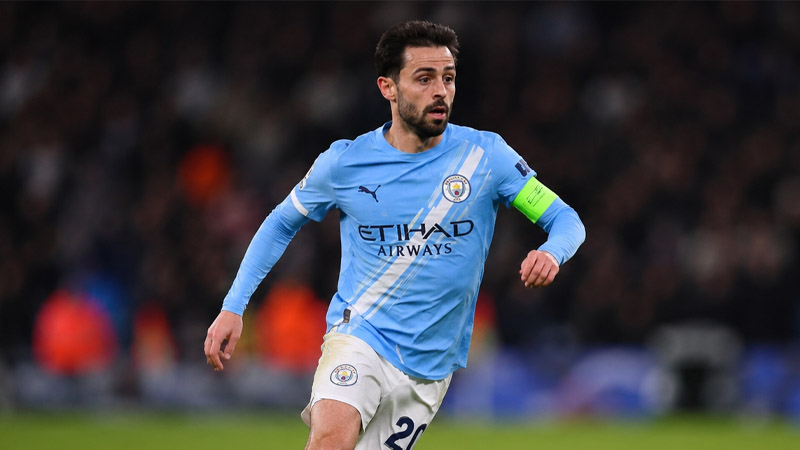
The long-standing speculation surrounding Bernardo Silva’s future at the Etihad Stadium has finally reached a definitive conclusion. Manchester City has confirmed that their club captain will depart at the end of the 2025–26 season.
After nine extraordinary years defined by tactical brilliance and a relentless work rate, the Portuguese maestro is set to embark on a new chapter. This move marks the end of an era for one of the most successful periods in the history of English football.
In this detailed analysis, we explore the motivations behind his exit, his legendary accomplishments, and his confirmed future destination.
The Official Confirmation of Silva’s Departure
The footballing world received concrete news in early 2026 regarding the future of the Manchester City captain. It was officially confirmed that Bernardo Silva would leave the club as a free agent upon the expiration of his contract in June 2026.
While fans had hoped for another extension, the player remained firm in his desire for a change of scenery.
This transition is not a sudden reaction to a single event but rather a calculated step in a career that has already reached the highest possible peaks of club football.
A Premeditated Decision Years in the Making
Bernardo Silva recently revealed that his choice to leave was actually made two years ago. Despite being a core pillar of the squad, he informed the hierarchy of his intentions well in advance.
He stated that when he made the decision, he knew he would not change his mind regardless of the successes achieved on the pitch.
This level of transparency allowed the club to prepare for his eventual exit, even as they continued to attempt to persuade him otherwise.
The Role of the Club Captaincy
Interestingly, Silva’s commitment to the team remained absolute despite his planned departure. Before the start of his final season, he actually suggested that Pep Guardiola should choose a different captain.
He felt it made more sense to appoint a player who would be staying at the club for the long term. However, Guardiola insisted on Silva leading the team, a testament to the immense respect he commands within the dressing room.
This leadership role allowed him to guide the younger players through his final campaign, ensuring the culture of excellence remained intact.
Why the Portuguese Maestro is Seeking a New Challenge
Understanding the “why” behind this exit requires looking beyond the football pitch. For Bernardo Silva, the decision was primarily driven by personal and lifestyle factors rather than any sporting dissatisfaction.
After spending nearly a decade in Manchester, the player felt it was the natural time to seek a different professional and personal environment. His departure is a move toward fulfillment in his private life as much as it is a sporting transition.
The Pull of Family and Culture
One of the most significant factors cited by Silva was the influence of his family. He mentioned that his family had been “pulling [him] back” for some time.
At 31 years old, he viewed the end of his contract as his last chance to take on a challenge in a different country. Furthermore, the cultural differences played a role in his long-term planning.
He admitted that while he loved the club, the lifestyle in Northern England was not 100 percent what he ideally wanted for his life.
The Desire for Professional Evolution
Silva has always been a player who values the collective over individual accolades. After winning 20 major trophies with Manchester City, including six Premier League titles and the elusive UEFA Champions League, he felt he had achieved everything possible with the Blues.
Leaving at the top of his game allows him to enter his next club with his reputation as a world-class operator fully intact. He expressed that doing something different made sense after achieving such a historical legacy at the Etihad.
A Statistical Breakdown of a Nine-Year Dynasty
Bernardo Silva’s impact can be measured through the staggering amount of silverware he helped bring to the club. His tenure coincided with the most dominant era in Manchester City’s history.
To understand the scale of his contribution, one must look at the sheer volume of games and titles he accumulated since 2017.
| Category | Achievement Detail |
|---|---|
| Total Appearances | 451 Matches |
| Goals Scored | 76 Goals |
| Assists Provided | 77 Assists |
| Premier League Titles | 6 Trophies |
| Champions League Titles | 1 Trophy |
| Total Major Trophies | 20 Titles |
| European Record | 91 Appearances (Club Record) |
Dominating the Domestic and European Stages
Beyond the table above, Silva’s records include three FA Cups and five League Cups. He was a pivotal member of the “Centurions” who reached 100 points, as well as the squads that secured the domestic quadruple and the historic Treble.
His consistency is highlighted by the fact that he became the Portuguese player with the most games played in the history of the Premier League.
His 91 European matches represent the highest tally for any Manchester City player, cementing his status as a continental veteran.
Tactical Mastery: Why Silva is Considered Unreplaceable
The difficulty in replacing Bernardo Silva lies in his unique profile as a “tactical chameleon”. Assistant manager Pep Lijnders famously stated that players like Silva simply “don’t exist” elsewhere in the market.
His departure leaves a void that cannot be filled by a single traditional signing because of the sheer breadth of roles he performed.
The Smartest Player on the Pitch
Teammates and coaches alike have struggled to find words to describe his footballing intelligence. Erling Haaland labeled him the “smartest player” he has ever played with.
Haaland noted that Silva’s ability to control the tempo of a game and find solutions under pressure is unparalleled. This “smartness” allowed him to dictate play against the world’s best defenses, often acting as the bridge between the midfield and the attack.
Versatility Across Nine Different Positions
Silva’s value was often found in his willingness to play wherever the team needed him most. Throughout his nine years, he seamlessly transitioned between several roles:
- Winger: Utilizing his dribbling and ball retention to stretch play.
- Central Midfield (#8 or #10): Directing the offensive flow and providing creative passes.
- False Nine: Serving as a tactical focal point to confuse central defenders.
- Double Pivot: Offering defensive stability and ball progression from deep.
- Left Back: Occasionally filling in to provide tactical width and control from the defensive line.
The Relationship with Pep Guardiola
The bond between the Portuguese midfielder and his manager was one of mutual tactical admiration. Guardiola has frequently referred to Silva as a “master” of the game.
The manager valued Silva’s intuition, specifically his knowledge of where the space was and how to manage complex in-game situations. Silva, in turn, has credited Guardiola with changing the way he sees football entirely.
Setting the Tone for the Squad
Guardiola relied on Silva to set the intensity for the entire team. Even when the player was physically “drained” or “exhausted” during congested fixture lists, he continued to run for the team. This work rate made him the “perfect Pep player”.
Guardiola once mentioned that even when Silva felt his mind and feet could not go on, he was still there for every single game, a level of commitment that the manager promised would never be forgotten.
The “Unselfish Maestro” Philosophy
Silva’s approach to the game was fundamentally unselfish. He often downplayed individual awards like the Ballon d’Or, noting that such prizes frequently favor strikers who get the “last touch” rather than the players who build the play.
He maintained that football is a collective sport, and his priority was always ensuring that the fans felt well-represented by the passion on the pitch. This selfless attitude is what made him the ideal captain for a squad filled with world-class talent.
Real Madrid and the Next Chapter
While several elite clubs expressed interest in the 31-year-old, his next destination has reportedly been settled. Despite long-term links to FC Barcelona and Juventus, insiders have confirmed that Silva has signed a two-year contract with Real Madrid.
This move will see him join the Spanish giants under the management of José Mourinho, marking a significant shift in his professional journey.
Why Barcelona and Juventus Missed Out
Barcelona had been long-term admirers of Silva, with reports suggesting he was close to joining them on multiple occasions. However, the financial complexities and the specific project offered elsewhere eventually led him toward the Spanish capital.
Juventus also remained in the hunt until the final stages, viewing him as the perfect veteran to lead their midfield transition. Ultimately, the allure of Real Madrid and the opportunity to work under a compatriot like Mourinho proved decisive.
The Challenges Awaiting in La Liga
Transitioning to La Liga at this stage of his career presents a fresh set of tactical challenges for Silva.
While the pace of the game may differ from the Premier League, his elite ball retention and match intelligence are expected to translate perfectly to the Spanish style of play.
He joins a Real Madrid squad that values technical excellence and winning experience, two traits he possesses in abundance.
How Manchester City Plans to Move Forward
Replacing a player who has made 451 appearances and won 20 trophies is a daunting task for any recruitment department.
The club’s assistant manager, Pep Lijnders, has already signaled that the team will not look for a direct clone of Silva because such a player does not exist. Instead, the club will likely look toward a combination of academy growth and strategic signings.
The Rise of Academy Talents
City’s youth system has been producing high-level technical players who have been integrated into the first-team environment. Lijnders suggested that the young boys in the academy must now make the step up to fill the void in the midfield positions.
The hope is that the core of remaining senior players will provide the stability needed for these younger talents to flourish.
Strategic Recruitment Strategy
While the academy is a priority, the club is also expected to be active in the transfer market to find players who fit the specific needs of the team’s evolution.
Rather than searching for a “new Bernardo,” the focus will be on finding what is needed to grow the team in a different direction.
This may involve bringing in a player with a different physical or technical profile who can still uphold the high standards of ball control and work rate established by the outgoing captain.
Frequently Asked Questions
Is Bernardo Silva officially leaving Manchester City?
Yes, it has been confirmed that Bernardo Silva will leave Manchester City at the conclusion of the 2025–26 season following the expiration of his contract.
Which club is Bernardo Silva joining next?
According to recent reports and transfer insiders, Bernardo Silva has signed a two-year contract to join Real Madrid under manager José Mourinho.
How many trophies did Bernardo Silva win at Man City?
During his nine seasons at the club, Silva won a total of 20 major trophies, including six Premier League titles, one Champions League, three FA Cups, and five League Cups.
Why did he decide to leave the Premier League?
Silva cited the desire for a new professional challenge and a move closer to his family. He also mentioned that cultural and lifestyle preferences made him seek a future in Southern Europe.
Who will replace Bernardo Silva in the City midfield?
The club is expected to rely on a mix of academy graduates and new strategic signings, though the coaching staff has admitted he is fundamentally impossible to replace directly.
Conclusion: A Final Farewell to a City Legend
Bernardo Silva leaves Manchester City not just as a player, but as a “supporter for life”. His journey from a young boy following a dream to a club captain with a record-breaking number of appearances is one of the most storied in modern football.
He leaves behind a legacy of 20 trophies and a reputation for being one of the most selfless and intelligent players to ever grace the Premier League.
As he heads to Real Madrid, City fans will remember him as the diminutive maestro who ran more than anyone else and always put the team first. The Etihad Stadium will undoubtedly feel his absence, but his impact on the club’s history is permanent.