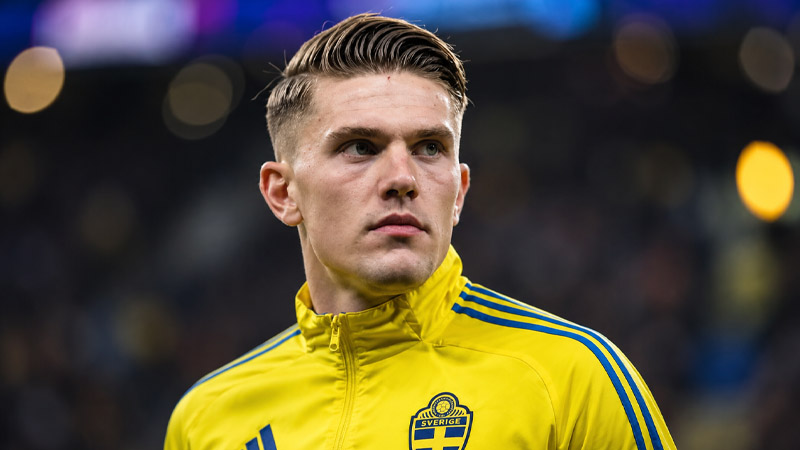
Viktor Gyökeres is currently one of the most discussed strikers in elite European football due to his clinical finishing and physical dominance on the pitch.
While fans recognize his prowess in front of goal, many are curious about the specific details surrounding his background and family history.
He is a player who represents the modern era of multicultural athletes, blending different European traditions into a single professional identity. U
nderstanding his origins provides a clearer picture of the man behind the goals at the highest level. This guide explores his dual citizenship, his family legacy, and his current standing in the international game.
Understanding Viktor Gyökeres Nationality and Heritage
The question of where a player comes from often involves more than just their place of birth or the shirt they wear on match days.
For this elite striker, his identity is a combination of his Scandinavian upbringing and his Central European ancestral ties. He holds dual nationality, officially being recognized as both a Swedish and a Hungarian citizen.
This dual status is not merely a legal formality but a reflection of a family history that spans across the European continent. While he has lived much of his life in the Swedish capital, the influence of his Hungarian roots remains a significant part of his personal story.
This blend of cultures has likely contributed to the disciplined yet creative approach he brings to the striker position.
Born and Raised in Stockholm
Viktor Gyökeres was born and raised in Stockholm, Sweden. This environment provided the foundation for his early development as a footballer within the highly structured Swedish youth systems.
Growing up in Stockholm allowed him to benefit from some of the best coaching and facilities available in Northern Europe.
The Swedish football culture emphasizes teamwork, physical fitness, and tactical intelligence. These traits are clearly visible in his playing style today, especially his ability to lead the line for a major club.
His Swedish upbringing is the primary reason why he feels a deep connection to the country’s sporting traditions and its national identity.
The Hungarian Citizenship Connection
Despite his Swedish birth, he holds Hungarian citizenship through a direct paternal line. This connection to Hungary is a vital part of his identity that reaches back several generations.
It provides him with a legal and emotional link to a nation known for its rich and storied footballing history.
Having Hungarian citizenship means he possesses a deep tie to the Puszta and the historical legacies of Budapest.
This aspect of his life is often highlighted by fans in Hungary who follow his career with great interest. It serves as a bridge between his current professional life and the history of his ancestors.
The Historical Context of the 1956 Revolution
To truly understand the roots of this Arsenal striker, one must look back at the geopolitical events of the mid-twentieth century.
Family histories are often shaped by larger historical forces that move populations across borders. His family story is no exception, as it is tied to one of the most significant uprisings in European history.
The migration of his family was not a matter of simple choice but a response to political instability and the search for a better life. This background adds a layer of resilience to his personal narrative, showing a legacy of overcoming adversity.
It is a story shared by many in the Swedish-Hungarian community who found a new home in the north.
A Grandfather’s Journey to Sweden
The Hungarian citizenship he holds today is a result of his paternal grandfather’s life choices. His grandfather fled Hungary for Sweden during the 1956 Hungarian Revolution.
This was a period of intense conflict and social upheaval that saw many Hungarians seek refuge in Western and Northern Europe.
Sweden became a sanctuary for those escaping the turmoil of the revolution, offering safety and new opportunities.
By settling in Sweden, his grandfather laid the groundwork for future generations to thrive in a stable environment. This act of bravery and migration eventually led to the birth of a future football star in Stockholm.
Legacy of the 1956 Hungarian Revolution
The 1956 Revolution remains a defining moment for the Hungarian people and their diaspora around the world.
It was a nationwide revolt against the government of the Hungarian People’s Republic and its Soviet-imposed policies. For families like the one Gyökeres belongs to, this event changed the course of their history forever.
The impact of this revolution is why there is such a prominent Hungarian community in Sweden today. These individuals brought their culture, names, and traditions to a new land while integrating into Swedish society.
This historical context provides a profound meaning to the dual nationality that the striker carries with him today.
The Meaning of the Surname Gyökeres
In football, a name can often become a brand, but for Viktor, his last name carries a very literal and symbolic meaning. Names in Hungarian culture often describe a characteristic or an origin, providing insight into a family’s past.
The linguistics of his surname offer a unique look at how he is perceived both on and off the field.
The name is distinctive and stands out in the team sheets of the Premier League, often prompting questions about its etymology.
It is a name that commands respect and carries the weight of his family’s journey from Budapest to the top of English football. Understanding the word itself helps fans appreciate the depth of his character.
Etymology and Symbolic Significance
The surname “Gyökeres” is directly derived from the Hungarian word gyökér, which means “roots”. When translated or interpreted in the context of a name, it essentially means “rooted” or “origin”.
This is a fitting description for a player whose family history is so deeply anchored in two different nations.
| Term | Meaning | Language |
|---|---|---|
| Gyökér | Roots | Hungarian |
| Gyökeres | Rooted / Origin | Hungarian |
Being “rooted” suggests a sense of stability, strength, and a clear understanding of one’s beginnings. In a professional sense, this could reflect his grounded personality and his steady rise through the ranks of professional football.
He remains connected to his past even as he reaches the pinnacle of his career in London.
Cultural Identity in the Premier League
In the globalized world of the Premier League, having a name that translates to “rooted” is a powerful identifier.
It sets him apart from other players and serves as a constant reminder of his dual heritage. Fans and commentators often find the meaning of his name to be a poetic reflection of his solid playing style.
His surname is a point of pride for the Hungarian community, representing their language in the most-watched football league in the world. It acts as a symbol of the successful integration of Hungarian descendants into other European societies.
For Viktor, it is a badge of honor that he wears every time he steps onto the pitch for Arsenal.
Professional Career and International Choice
A player’s nationality often dictates their international career, and for those with dual citizenship, a choice must be made. This decision is one of the most significant a footballer will ever face, as it defines their legacy on the world stage.
For the Arsenal striker, this path was cleared through his early involvement in the Swedish system.
His professional journey has taken him from Sweden to the United Kingdom, where he has established himself as a top-tier talent.
Throughout this rise, his international allegiance has remained a focal point of his professional identity. It is a testament to his loyalty and his sense of belonging to the country where he was born.
Representing the Sweden National Team
Despite his strong Hungarian ties, Viktor Gyökeres represents the Sweden National Team in international football.
This choice reflects his upbringing in Stockholm and his development through the Swedish youth ranks. He has become a vital part of their attacking lineup, often serving as the primary goal threat.
Playing for Sweden allows him to give back to the country that welcomed his grandfather and provided him with a platform to succeed. He is seen as a hero in Swedish football, embodying the strength and talent of the modern national team.
His commitment to the Blue and Yellow is unwavering, and he continues to be a key figure in their pursuit of international trophies.
Current Success at Arsenal FC
At the club level, he currently plays as a striker for the Premier League club Arsenal FC. Joining a club of such stature is a clear indication of his status as one of the best in the business.
His move to London has placed him under the global spotlight, where his Every move is analyzed by millions.
| Detail | Information |
|---|---|
| Current Club | Arsenal FC |
| Position | Striker |
| League | Premier League |
His performance at Arsenal has been characterized by his “rooted” strength and his ability to hold up the ball against the league’s toughest defenders.
He has quickly become a fan favorite at the Emirates Stadium, with supporters appreciating his work rate and clinical nature. His success in England is the latest chapter in a career that has always been defined by growth and excellence.
The Impact of Dual Nationality on Player Branding
In the modern sporting landscape, a player’s background is a key component of their personal brand and marketability.
Dual nationality offers a unique opportunity to connect with multiple fan bases across different geographical regions. For an athlete at a top club, this heritage can be leveraged to build a more diverse and engaged following.
His story of migration and success resonates with a global audience that values perseverance and cultural diversity. It allows him to be an ambassador for both Swedish excellence and Hungarian pride simultaneously.
This dual appeal makes him a valuable asset for sponsors and a role model for young players with similar backgrounds.
Connecting with Global Fan Bases
Because he is Swedish-born with Hungarian blood, he attracts interest from fans in both Stockholm and Budapest. Swedish fans see him as one of their own, a local boy who made it to the biggest stage in the world.
Meanwhile, Hungarian fans take immense pride in his success, viewing him as a representative of their diaspora’s potential.
This cross-cultural connection is particularly strong during international breaks or major tournaments. Even when he is playing for Sweden, he often receives support from Hungarian spectators who admire his lineage.
This widespread support base is a direct result of his dual nationality and his family’s history.
Role Model for Multicultural Youth
Many young footballers today grow up in households with multiple cultural influences and dual citizenships. Seeing a player like Gyökeres succeed at Arsenal provides a blueprint for how to navigate these identities.
He shows that it is possible to embrace one’s ancestral roots while remaining fully committed to the country of one’s birth.
His story encourages young athletes to be proud of their family history, no matter how complex it might be.
By acknowledging the journey of his grandfather and the meaning of his name, he provides a narrative of honor and respect. He is a modern icon for the “rooted” generation of athletes who are making their mark on the world.
Frequently Asked Questions
Can he play for the Hungary National Team?
While he holds Hungarian citizenship, he has already committed to the Sweden National Team at the senior level.
According to FIFA regulations, once a player has played a certain number of competitive matches for one senior national team, they are generally tied to that nation. His career has been firmly established with the Swedish side, where he is a regular starter.
Why did his grandfather leave Hungary?
His paternal grandfather left Hungary during the 1956 Hungarian Revolution to seek safety and a more stable life in Sweden.
This was a common path for thousands of Hungarians during that era of political upheaval. The move was a pivotal moment that eventually allowed his grandson to be born and raised in Stockholm.
What does his surname mean in English?
The surname “Gyökeres” translates most accurately to “rooted” or “having roots” in English. It comes from the Hungarian word gyökér, which simply means “root”.
This name is a powerful symbol of his connection to his family’s origins and their history in Central Europe.
Conclusion: A Striker Who Remembers His Roots
Viktor Gyökeres is much more than just a talented striker for Arsenal and Sweden; he is a living connection between two distinct European cultures.
His dual nationality as a Swedish and Hungarian citizen is a testament to his family’s resilience and their journey through history. From the streets of Stockholm to the historical echoes of the 1956 Revolution, his path has been defined by a strong sense of identity.
His name, meaning “rooted,” serves as the perfect metaphor for his career and his character. He remains a grounded individual who understands the importance of where he came from, even as he reaches the heights of the Premier League.
As he continues to score goals and break records, he carries the legacy of his grandfather and the pride of two nations with him.
For fans and analysts alike, his story is a reminder of how sports can bridge cultures and celebrate diverse backgrounds. Whether he is wearing the red of Arsenal or the yellow of Sweden, he remains the “rooted” striker, a player who truly knows his origins.
His journey continues to inspire, proving that no matter how far you go, your roots are always part of your success.