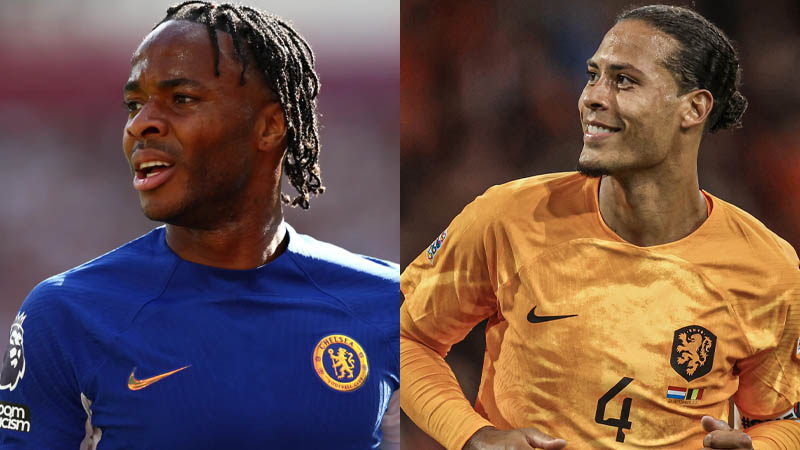
The 2018–2019 Premier League campaign is widely regarded as one of the most competitive eras in modern football history, characterized by the unrelenting pursuit of excellence by Manchester City and Liverpool.
At the heart of this high-stakes competition was a specific individual matchup that came to symbolize the tactical evolution of the league: the confrontation between Raheem Sterling and Virgil van Dijk.
This analysis deconstructs the mechanics of their rivalry, the divergence in their technical profiles, and the professional mutual respect that defined an era of English football.
Tactical Foundations: Archetypal Comparison
The confrontation between these two athletes was not merely a physical contest but a clash of opposed footballing philosophies.
Sterling represented the pinnacle of modern offensive agility, while Van Dijk served as the ultimate defensive stabilizer.
| Feature | Raheem Sterling: The Offensive Catalyst | Virgil van Dijk: The Defensive Anchor |
|---|---|---|
| Primary Attribute | Blistering pace and acceleration. | Imposing physical stature and strength. |
| Mechanical Advantage | Extremely low center of gravity for rapid direction changes. | Elite positional awareness and reading of the game. |
| Tactical Role | Manipulating defensive lines through intelligent movement. | Providing “unshakeable calmness” and a defensive “aura”. |
| Operational Goal | Forcing defenders into awkward, reactive positions. | Neutralizing threats through calculated positioning. |
The Engineering of the Offensive Threat
Sterling’s effectiveness during this period was predicated on his ability to transition from a stationary position to top speed instantaneously.
By leveraging a low center of gravity, he could navigate tight spaces within the penalty area, making him a perennial threat to any defensive structure.
His movement was not just fast; it was intelligent, designed to drag elite defenders out of their preferred zones.
The Architecture of Modern Defense
Conversely, Van Dijk’s approach was built on psychological and spatial dominance. Rather than relying solely on reactive tackling, he utilized his “aura”—a combination of physical presence and perceived invincibility—to dictate the terms of the engagement.
His calmness under pressure allowed Liverpool to maintain a high defensive line, knowing his recovery speed and positional intelligence could mitigate almost any breakthrough.
The 2018-2019 Season: A Statistical and Qualitative Review
The individual performances of Sterling and Van Dijk were the primary engines behind their respective teams’ record-breaking seasons.
While Manchester City eventually secured the title, the margin of error was nonexistent, largely due to the consistency of these two figures.
| Metric | Raheem Sterling (Manchester City) | Virgil van Dijk (Liverpool) |
|---|---|---|
| Premier League Goals | 17 Goals. | 4 Goals (plus aerial dominance). |
| Premier League Assists | 10 Assists. | Crucial in the buildup and long-range distribution. |
| Durability | High-frequency explosive performances. | Played every single league game of the season. |
| Team Impact | Primary goal-threat and creative outlet. | Anchored a “historically strong” defense. |
| Key Performance Indicator | Space creation and clinical finishing. | Clean sheets and defensive organization. |
Sterling’s Contribution to the City Machine
Sterling’s output of 27 goal involvements (17 goals and 10 assists) made him the most potent weapon in Pep Guardiola’s tactical arsenal.
His ability to operate across the front three allowed City to maintain a fluid attack that was difficult to track or man-mark effectively.
Van Dijk’s Transformative Presence
For Liverpool, Van Dijk was more than a center-back; he was a foundational shift in the club’s identity.
By playing every single minute of the Premier League season, he provided the reliability necessary for Liverpool to challenge for the title until the final day.
His presence turned a previously vulnerable defense into one of the most formidable units in European football history.
The Elite Individual Honor Conflict
As the season reached its conclusion, the debate shifted from team trophies to individual accolades. The 2019 award season was a rare instance where two players from rival clubs were equally deserving of the highest honors, leading to a split in the major awards.
| Award Title | Recipient | Significance of the Selection |
|---|---|---|
| FWA Footballer of the Year | Raheem Sterling. | Recognized by the Football Writers’ Association for his impact on the game and consistent goal-scoring prowess. |
| PFA Players’ Player of the Year | Virgil van Dijk. | Selected by his professional peers as the most difficult and impressive opponent in the league. |
| Award Philosophy | Offensive excellence and statistical dominance. | Defensive stability and leadership within a record-breaking unit. |
The Writers’ Perspective: Sterling’s Narrative
The FWA award recognized Sterling’s evolution from a promising winger to a world-class finisher. His ability to deliver in high-pressure moments for the eventual champions made him the logical choice for those observing the game from the media galleries.
The Players’ Perspective: Van Dijk’s Dominance
The PFA award carries a specific weight because it is voted on by the players who directly face the nominees.
The fact that Van Dijk won this award while playing as a defender highlights the sheer difficulty attackers faced when trying to bypass him. His peers acknowledged that his presence fundamentally changed how teams had to play against Liverpool.
1v1 Mechanics: When Speed Meets Stature
The most anticipated moments of the City-Liverpool fixtures were the direct one-on-one confrontations between Sterling and Van Dijk. These were masterclasses in elite-level timing and physical strategy.
| Tactical Phase | Offensive Maneuver (Sterling) | Defensive Countermeasure (Van Dijk) |
|---|---|---|
| The Approach | Utilizing sudden bursts of speed to beat the defender on the outside. | Using height and stride length to match the attacker’s trajectory without committing early. |
| Physical Engagement | Using a low center of gravity to shield the ball or win fouls. | Using physical power to outmuscle the attacker and regain possession. |
| Spatial Control | Cutting inside to create shooting angles or facilitate layoffs. | Forcing the attacker into wide, low-probability zones to minimize danger. |
| Outcome Frequency | High-pressure situations result in defensive tension. | Frequent neutralization of the attack through calculated positioning. |
Van Dijk’s strategy in 1v1 situations was often to wait for the attacker to make the first move. Against a player as fast as Sterling, committing too early would be a tactical error.
Instead, Van Dijk utilized his stature to shepherd Sterling away from the central areas of the pitch, effectively “neutralizing” the threat before it reached the penalty area.
Professional Ethics and Peer Recognition
One of the most remarkable aspects of this rivalry was the high level of professionalism and mutual respect maintained by both athletes.
Despite the tribalism of the Manchester City and Liverpool fanbases, the players themselves displayed a profound understanding of each other’s talents.
| Professional Signal | Detail |
|---|---|
| The PFA Vote | Virgil van Dijk revealed that he personally voted for Raheem Sterling for the PFA Player of the Year award. |
| Justification | Van Dijk cited Sterling’s “immense growth” as a professional and his “fantastic season” as the reasons for his vote. |
| Competitive Integrity | Both players publicly praised one another despite the intense pressure of the title race. |
| Long-term Impact | Established a standard for how high-level rivalries can be conducted with dignity. |
This gesture by Van Dijk—voting for his primary rival for the league’s top individual honor—underscores the culture of excellence that existed in the Premier League at the time.
It demonstrated that even in the heat of a historic title race, elite performers can objectively recognize the brilliance of their competitors.
Expert Analysis FAQ
Q: Why was the 2018-2019 season considered the peak of this rivalry?
A: This specific window saw both players at their absolute physical and tactical zenith. Sterling had fully integrated into Guardiola’s system as a primary scorer, while Van Dijk had completed his first full season at Liverpool, fundamentally altering their defensive trajectory.
Q: How did Van Dijk’s “aura” affect Sterling’s playstyle?
A: The “aura” refers to the psychological pressure Van Dijk exerted. Attackers often felt they could not beat him 1v1, leading them to take fewer risks or attempt forced passes. In their direct duels, Van Dijk’s calmness often forced Sterling into wider, less threatening areas of the pitch.
Q: Which player had the greater impact on their respective team?
A: This remains a point of debate. Sterling’s 27 goal involvements were essential for a City team that won the league by a single point.
However, Van Dijk’s ability to anchor a “historically strong” defense while playing every minute of the season was the catalyst for Liverpool’s return to the top of European football.
Q: What did Van Dijk specifically admire about Sterling?
A: Van Dijk highlighted Sterling’s “immense growth” over the season. He recognized that Sterling had evolved into a more complete forward, combining his natural pace with improved decision-making and finishing.
Conclusion: A Legacy of Excellence
The Sterling-Van Dijk rivalry was a gift to football purists. It offered a weekly demonstration of how elite speed and agility can be met with elite positioning and physical dominance.
While the record books will show Manchester City as the champions of that era, the individual battle between Sterling and Van Dijk serves as the definitive case study in modern tactical excellence.
Their mutual respect, culminating in Van Dijk’s vote for Sterling, serves as a reminder that the highest levels of sport are built on the foundation of recognizing greatness in one’s opponent.
This matchup did not just define a season; it set the benchmark for defensive and offensive standards in the Premier League for years to come.