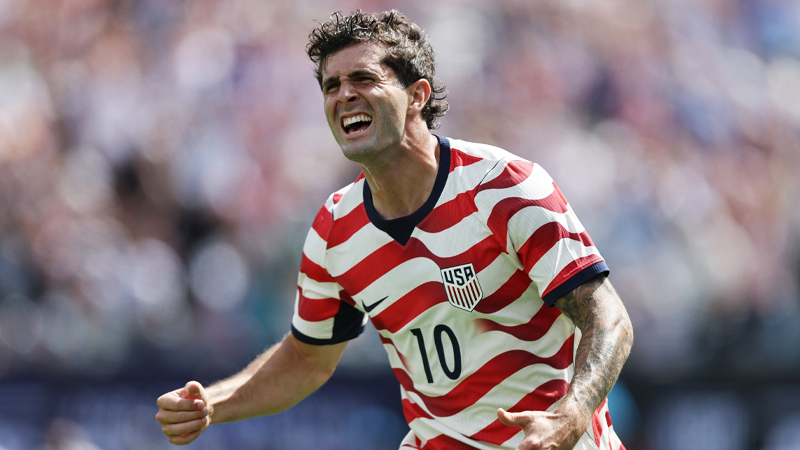
Christian Pulišić remains the most recognizable figure in American soccer, often serving as the face of a rising generation of talent.
While his on-field exploits at clubs like AC Milan and Borussia Dortmund are well-documented, his background often sparks questions regarding his eligibility and heritage.
As a dual citizen of the United States and Croatia, Pulišić represents a modern era of global athletes who navigate multiple identities.
This article explores the nuances of his nationality, the strategic importance of his European passport, and his unwavering commitment to representing the American flag on the international stage.
Defining Christian Pulišić’s Nationality and Origins
To understand the profile of this elite athlete, one must look at the specific details of his birth and legal standing. Pulišić is primarily an American citizen, having been born and raised in Hershey, Pennsylvania, in the United States.
However, his legal status is more complex than a single passport. Due to his family history, he holds dual citizenship, which has been a cornerstone of his professional journey from a young age.
Below is a quick reference table detailing the core facts of his background:
| Category | Information |
|---|---|
| Primary Nationality | American |
| Secondary Nationality | Croatian |
| Place of Birth | Hershey, Pennsylvania, U.S.A. |
| National Team Debut | 2016 (United States) |
| Eligibility Basis (Croatia) | Paternal Grandfather |
The American Foundation: Born and Raised in Hershey
The core of Pulišić’s identity is firmly rooted in the United States. His upbringing in Pennsylvania provided the traditional American environment where he first developed his passion for the sport.
Unlike some dual nationals who may have spent significant time living abroad during their formative years, Pulišić is a product of the American youth soccer ecosystem.
Early Life in Pennsylvania
Growing up in Hershey, Pulišić was immersed in a sports-centric culture. His parents both had backgrounds in soccer, which influenced his early trajectory.
While the United States remained his home, the level of competition he faced domestically was just the beginning of a much larger journey.
His development in Pennsylvania laid the groundwork for his eventual transition to the high-stakes world of European football.
Rise Through the U.S. Youth System
Before making a name for himself in the Bundesliga or the Premier League, Pulišić was a standout in the American youth ranks. His performance for various U.S. youth national teams solidified his status as a “wonderkid.”
This early exposure to the American national setup fostered a deep sense of loyalty to the program, even as European scouts began to take notice of his unique skill set and vision on the pitch.
The Croatian Connection: Family Heritage and Legacy
While Pulišić is culturally American, his Croatian heritage is a significant part of his family narrative. This connection is not merely a formality but a link to his paternal lineage that spans generations.
The presence of this heritage provided a unique opportunity when it came time to advance his professional career in Europe.
Understanding the Paternal Lineage
The roots of his dual nationality trace back to his paternal grandfather, who was born in Croatia. This direct ancestral link allowed Pulišić to apply for and receive Croatian citizenship.
In the world of international soccer, these connections are often scrutinized, but for the Pulišić family, it was a way to honor their history while providing the next generation with the best possible tools for success.
The Formal Acquisition of Citizenship
Pulišić officially obtained his Croatian citizenship during his teenage years. While he does not speak the language fluently and has never lived in the country for an extended period, the legal recognition of his heritage was a vital step.
This process was handled with care to ensure that all FIFA and international legal requirements were met, allowing him to hold two passports simultaneously without compromising his primary American status.
The Strategic Role of Dual Citizenship in Global Soccer
For an American player with ambitions to play in Europe, nationality is often a logistical hurdle. FIFA regulations and European labor laws can make it difficult for young players from “non-EU” countries to sign professional contracts.
Pulišić’s Croatian heritage provided a strategic solution to these challenges, acting as a gateway to the world’s most competitive leagues.
The Advantage of an EU Passport
The primary driver for securing Croatian citizenship was the acquisition of a European Union (EU) passport. Under EU labor laws, players with a passport from a member nation can move freely between clubs within the union starting at age 16.
Without this, Pulišić would have likely been forced to wait until he was 18 to join a top-tier European academy like Borussia Dortmund.
Facilitating the Move to Borussia Dortmund
When Pulišić moved to Germany as a teenager, his Croatian passport was the key that unlocked the door. It allowed him to bypass the restrictive work permit requirements that often hinder young American prospects.
This early start was crucial for his development, as it placed him in an elite professional environment during the most critical years of his growth.
Impact on Career Longevity and Value
Having dual citizenship also enhances a player’s marketability and flexibility. Clubs in leagues like Serie A or La Liga often have limits on the number of “non-EU” players they can register on their squads.
By being a Croatian citizen, Pulišić does not count toward these restrictive quotas in many European leagues, making him a more attractive asset for top-tier clubs looking to optimize their rosters.
International Allegiance: Choosing the USMNT Over Croatia
Despite having the legal option to represent Croatia on the international stage, Pulišić’s decision was never in doubt.
He has consistently expressed his desire to play for the United States, a choice that has endeared him to millions of fans across North America.
His commitment to the United States Men’s National Team (USMNT) has been the defining feature of his international career.
Senior National Team Commitment since 2016
Pulišić made his senior debut for the United States in 2016 and has been a permanent fixture in the squad ever since.
By playing in competitive matches for the U.S., he effectively “cap-tied” himself to the American program, meaning he can no longer switch his allegiance to Croatia under current FIFA rules.
This formal commitment was a major milestone for American soccer fans who feared losing such a talent to a European powerhouse.
Leadership and the “Captain America” Moniker
His role within the USMNT has evolved from a young prospect to a veteran leader. Often referred to by fans as “Captain America,” he has shouldered the expectations of a nation.
Whether competing in the World Cup or regional tournaments like the CONCACAF Gold Cup, his performance is a testament to his dedication to his home country.
Comparing the Potential Paths
If Pulišić had chosen to represent Croatia, he would have joined a team with a rich history of deep runs in the World Cup, including a final appearance in 2018. However, his choice to represent the U.S. demonstrates a desire to be a pioneer.
He chose to build a legacy in a country where soccer is still fighting for mainstream dominance, rather than joining an established European giant.
Analyzing the Impact of Dual Nationality on the USMNT Brand
The story of Pulišić’s nationality is indicative of a broader trend within the USMNT. The squad is increasingly composed of players with dual or even triple citizenship.
This diversity is a strength, bringing different perspectives and experiences to the locker room. Pulišić’s success has served as a blueprint for other young dual nationals considering their international futures.
- Global Scouting Advantage: The ability for American players to leverage European heritage allows them to get into top academies earlier, bringing higher-level experience back to the national team.
- Cultural Representation: Pulišić’s story resonates with the millions of Americans who share a similar immigrant or multi-national background.
- Competitive Edge: Having players who are “domestic” in the eyes of European leagues increases the frequency of Americans playing at the highest levels of club soccer.
Frequently Asked Questions
Is Christian Pulišić Croatian?
Technically, yes, he is a Croatian citizen through his paternal grandfather. However, culturally and by birth, he is American. He uses his Croatian status primarily for professional logistics in Europe.
Does Pulišić speak Croatian?
No, he is not known to be fluent in the language. Having grown up in Pennsylvania, English is his primary language. His connection to Croatia is primarily ancestral and legal rather than linguistic.
Why did he get a Croatian passport?
The passport was essential for him to play in Europe before the age of 18. As a citizen of an EU member state (Croatia), he was able to sign with Borussia Dortmund and play in competitive matches much earlier than a standard American citizen could.
Has he ever played for the Croatian national team?
No. Pulišić has played for the United States senior squad since 2016 and represented U.S. youth teams before that. He has never represented Croatia at any level of international soccer.
Conclusion: The Modern Identity of an American Icon
Christian Pulišić’s nationality is a blend of heritage and strategy, but his heart remains firmly with the United States. While his Croatian citizenship provided the legal gateway to European success, his identity was forged in the fields of Hershey, Pennsylvania.
He represents the best of both worlds: the grit and determination of the American spirit combined with the technical opportunities afforded by his European roots.
As the USMNT continues to grow on the world stage, Pulišić stands as a symbol of the modern player—one who is globally connected but nationally devoted.
His dual heritage did not divide his loyalty; instead, it empowered him to become the most successful American player of his generation.
For fans and analysts alike, understanding his nationality is key to appreciating the complex and rewarding path he has taken to the top of the beautiful game.