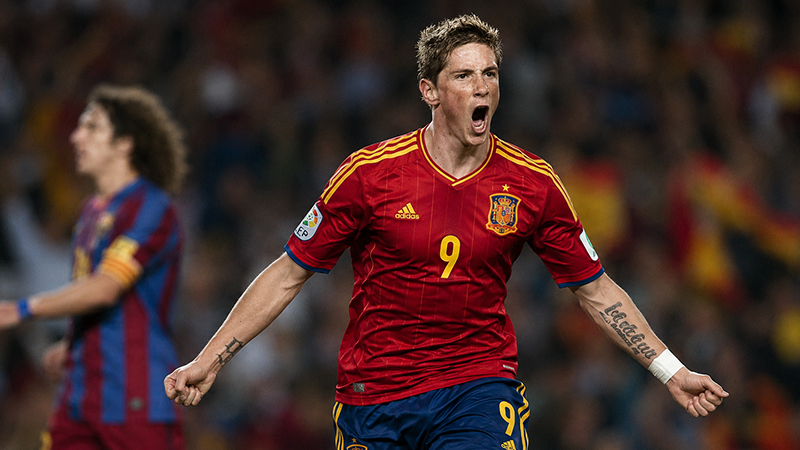
Football history is often a tapestry woven with famous bloodlines and sporting dynasties. From the Maldini family in Italy to the Alcantara brothers in Spain, fans have grown accustomed to seeing talent passed down through generations.
However, names can sometimes be deceiving, leading to widespread speculation among global supporters. One of the most persistent questions in modern football circles involves the connection between two iconic Spanish forwards.
As the younger generation takes center stage, many are left wondering if the current Barcelona star shares more than just a famous surname with the legendary “El Niño.”
The Definitive Answer: Is Ferran Torres Related to Fernando?
The question of whether Ferran Torres is related to Fernando Torres is one of the most frequently searched topics by football fans globally. Despite the shared surname and their mutual success in the Spanish national team, the answer is a definitive no.
Ferran Torres and Fernando Torres are not related by blood or marriage; they simply happen to share one of the most common surnames in the Spanish-speaking world.
While both have reached the pinnacle of professional football, their family backgrounds and geographic origins are entirely distinct.
To understand why this confusion persists and to appreciate the unique paths these two athletes have taken, we must look at the specific data points that define their separate identities.
Comparing the Two Spanish Icons
To provide a clear distinction, the following table highlights the fundamental differences in their backgrounds, proving their separate lineages.
| Feature | Ferran Torres | Fernando Torres |
|---|---|---|
| Full Name | Ferran Torres García | Fernando José Torres Sanz |
| Date of Birth | February 29, 2000 | March 20, 1984 |
| Place of Birth | Foios, Valencia | Fuenlabrada, Madrid |
| Playing Status | Active (FC Barcelona) | Retired (Legendary Status) |
| Primary Position | Forward / Winger | Striker |
As shown in the table, the parental surnames (García for Ferran and Sanz for Fernando) further confirm that there is no immediate familial link between the two.
Profiling Ferran Torres: The Modern Era of Spanish Football
Born in the year 2000, Ferran Torres represents the new wave of Spanish talent that combines technical proficiency with modern tactical flexibility.
Growing up in Foios, a small town in the Valencian community, his journey began far from the capital where Fernando Torres made his name.
Ferran’s rise through the ranks of the Valencia CF academy marked him as a “wonderkid” long before he became a household name across Europe.
His career trajectory has been nothing short of meteoric. After establishing himself as a key player for Valencia, he made a high-profile move to Manchester City under the tutelage of Pep Guardiola.
This transition was crucial in refining his versatility, allowing him to operate effectively as both a traditional winger and a “false nine.”
The Move to FC Barcelona and National Team Impact
In late 2021, Ferran returned to Spain to join FC Barcelona, a move that solidified his status as a cornerstone of the national team’s future.
His playing style is characterized by intelligent off-the-ball movement, clinical finishing, and an ability to thrive in high-pressure environments.
Unlike the traditional “number nine” role often associated with Fernando Torres, Ferran is a hybrid forward, capable of stretching defenses from wide areas or drifting into the box to capitalize on half-chances.
His contributions to the Spain national team have been significant, often serving as the primary goal threat in major tournaments.
This international presence is another reason why fans frequently draw parallels between him and the elder Torres, as both have shouldered the burden of scoring for La Roja.
The Iconic Legacy of Fernando “El Niño” Torres
To understand why the “Torres” name carries such weight, one must look at the legendary career of Fernando José Torres Sanz. Born in Fuenlabrada, Madrid, in 1984, Fernando became a symbol of Atlético Madrid from a very young age.
His nickname, “El Niño” (The Kid), was a testament to his precocious talent and the fact that he was captaining his boyhood club while still a teenager.
Fernando’s career is defined by his explosive pace, physical strength, and an almost intuitive sense for goal-scoring. He wasn’t just a player; he was a global brand whose impact transcended the pitch, particularly during his time in the English Premier League.
A Career Defined by Silverware and Success
Fernando Torres is widely regarded as one of the greatest strikers of his generation. His stints at some of the world’s most prestigious clubs secured his place in football history:
- Atlético Madrid: The heart and soul of the club, where he began and ended his European career.
- Liverpool FC: Arguably his peak years, where he became a cult hero and one of the most feared strikers in the world.
- Chelsea FC: Though his goal-scoring rate slowed, he was instrumental in winning the UEFA Champions League and the Europa League.
- Spain National Team: A key figure in the “Golden Generation” that won two European Championships and the 2010 FIFA World Cup.
His ability to score in major finals—most notably the winning goal in the Euro 2008 final—cemented his status as a legendary former striker.
The Linguistic Connection: Ferran vs. Fernando
One of the most fascinating aspects of this naming confusion is rooted in the linguistic diversity of the Iberian Peninsula. While they are two different individuals, their first names are actually regional variations of the same name.
In the Valencian and Catalan languages, “Ferran” is the linguistic equivalent of the Castilian Spanish name “Fernando”. This means that, essentially, both players share the same first name and the same last name, just in different regional dialects.
Why This Leads to Search Confusion
For an international audience not familiar with the nuances of Spanish regional languages, seeing “Ferran Torres” and “Fernando Torres” feels like looking at two versions of the same identity.
When you combine this linguistic overlap with the fact that both are high-profile Spanish forwards, it is easy to see why search engines are flooded with inquiries about their relationship.
The name “Torres” itself translates to “Towers” in English and is a common toponymic surname in Spain. It originally referred to people who lived near or worked in towers or fortified houses.
Because it is so widespread, sharing the surname “Torres” in Spain is akin to sharing the name “Smith” or “Johnson” in the English-speaking world.
Tactical Evolution: From El Niño to the Modern Forward
Beyond the name, there is a tactical reason why fans might link these two. Both players represent the evolution of the Spanish forward.
Fernando Torres was the quintessential elite striker—fast, direct, and powerful. He thrived on through-balls and physical duels with center-backs.
Ferran Torres, on the other hand, represents the tactical shift toward “total football” and positional fluidity. While he can play as a central striker, his game is much more about interchanging positions, creating space for midfielders, and high-intensity pressing.
Key Tactical Differences
- Versatility: Ferran is comfortable on both wings and through the middle, whereas Fernando was almost exclusively a central striker.
- Playmaking: Ferran is more involved in the build-up play and chance creation compared to the more finishing-oriented Fernando.
- Era of Football: Fernando played in an era of more traditional formations (4-4-2 or 4-2-3-1), while Ferran thrives in the modern 4-3-3 systems favored by managers like Guardiola and Xavi.
Common Questions and Misconceptions
Is Ferran Torres Fernando’s son?
No, this is impossible given the age gap. Fernando was born in 1984 and Ferran in 2000. Fernando would have been only 16 years old when Ferran was born. Furthermore, as established, they were born in different regions of Spain to different families.
Have they ever played together?
They have never played together on the same team. Fernando Torres retired from professional football in 2019, while Ferran Torres was just beginning his rise at Valencia and later Manchester City.
While they both represented Spain, their timelines for the national team did not overlap.
Do they have any connection at all?
Their only connection is professional and cultural. They have both worn the prestigious number 9 or 11 shirts for Spain and have both been coached by prominent figures in Spanish football.
They represent the past and the present/future of the nation’s attacking prowess.
Final Verdict: Celebrating Two Unique Paths
In the world of sports, names carry a certain magic. They evoke memories of goals, trophies, and moments of brilliance.
While Ferran Torres and Fernando Torres share a name that resonates deeply with football fans, they are two separate entities who have contributed to the sport in their own unique ways.
Fernando “El Niño” Torres will forever be remembered as the striker who helped define a golden era for Spanish football. His legacy is secure in the halls of fame at Anfield and the Metropolitano.
Ferran Torres, conversely, is still writing his story. At FC Barcelona and in the national team, he is carving out a legacy that is entirely his own, independent of the great strikers who came before him.
Ultimately, the confusion between the two serves as a tribute to the enduring impact of the “Torres” name in the beautiful game.
Whether it is the legendary retired striker or the modern Barcelona forward, the name remains synonymous with Spanish excellence on the global stage.
Understanding that they are not related allows fans to appreciate each player’s individual achievements without the shadow of comparison, celebrating the diversity and depth of talent that Spain continues to produce.