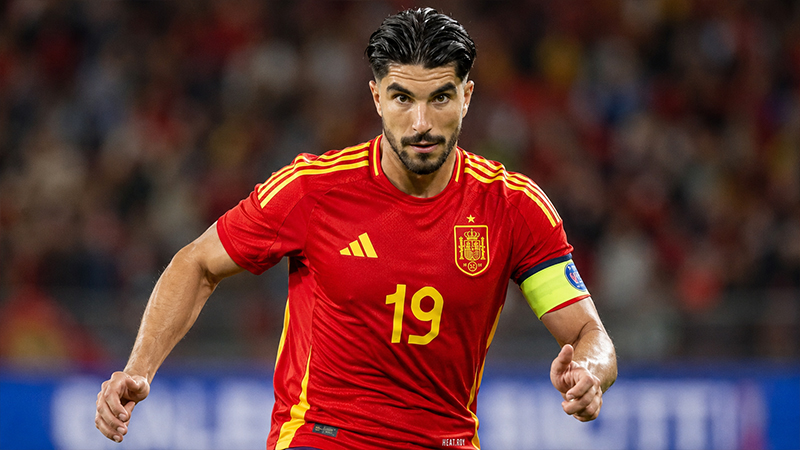
The landscape of Spanish football witnessed a significant tactical shift on September 1, 2025, when Carlos Soler officially completed his permanent transfer to Real Sociedad from Paris Saint-Germain.
This move represents more than just a change of scenery; it is a calculated homecoming for a midfielder whose career reached its zenith in La Liga but faced stagnation in the high-pressure environment of the French capital.
By securing a long-term commitment through 2029, Real Sociedad has not only bolstered its technical core but has also provided Soler with the stability required to reclaim his status as one of Europe’s most versatile midfielders.
The Strategic Shift: Carlos Soler’s Move to Anoeta
The acquisition of Carlos Soler by Real Sociedad is a masterclass in market timing and tactical alignment, addressing the club’s need for experienced leadership in the center of the pitch.
After being deemed surplus to requirements by PSG manager Luis Enrique, Soler’s return to Spain was a priority for both the player and the Basque club.
Financial Structure of the Transfer
The financial nuances of this deal reflect the current economic realities of European football, balancing immediate investment with long-term potential.
| Feature | Details |
|---|---|
| Transfer Fee | Reported between €6 million and €8 million |
| Economic Rights | Real Sociedad reportedly acquired 50% of his rights |
| Sell-on Clause | PSG retains a percentage of future transfer value |
| Contract Duration | Through June 2029, with a one-year extension option |
Long-Term Commitment and Stability
Following a period of uncertainty in Paris, the five-year contract provides Soler with the necessary runway to integrate fully into Real Sociedad’s demanding system.
At 29 years old, he is entering his physical prime, and the club’s option to extend his stay into 2030 suggests a high level of confidence in his durability and performance levels.
This stability is a sharp contrast to his recent seasons, which were characterized by rotational roles and loan spells.
Tracing the Path: From Valencia to Paris
Understanding the magnitude of the Carlos Soler transfer requires an analysis of his formative years at Valencia CF and the high-profile, yet complex, tenure at Paris Saint-Germain.
The Valencia Foundations
Before his international journey, Soler was the heartbeat of Valencia CF, where he transitioned from a promising academy graduate to a cornerstone of the first team.
Between 2016 and 2022, he made over 220 appearances, showcasing an uncanny ability to influence play from multiple midfield positions.
His crowning achievement during this period was the 2019 Copa del Rey victory, a title that cemented his legacy at the Mestalla as a high-output player capable of performing on the biggest stages.
Challenges at Paris Saint-Germain
In September 2022, Soler moved to PSG for an initial fee of €18 million, a step intended to elevate him to the elite echelon of European football. While his trophy cabinet grew with two Ligue 1 titles, his personal development hit a plateau.
Under the management of Luis Enrique, Soler struggled to secure a permanent starting position, often finding himself as a secondary option in a star-studded roster.
By 2024, it became clear that he was not part of the long-term tactical vision at the Parc des Princes, prompting the club to seek a permanent exit strategy.
The Premier League Experience at West Ham
Prior to his permanent move to Real Sociedad, Soler utilized a loan spell at West Ham United during the 2024–2025 season to maintain his match fitness and prove his value on the global stage.
Performance Metrics in London
During his time in the English Premier League, Soler demonstrated significant resilience, making 31 appearances across all competitions. This stint was crucial as it proved he could adapt to the high physical demands and fast pace of English football.
Although he initially expressed a desire to remain at West Ham on a permanent basis, the club’s shifting priorities and the lure of a primary role in Spain eventually led him back to La Liga.
The West Ham period served as a vital bridge, keeping his market value stable and showcasing his versatility to potential suitors.
Tactical Profile and Real Sociedad’s Midfield
The technical profile of Carlos Soler is uniquely suited to the possession-based, high-intensity style of play favored at Real Sociedad.
- Central Midfield (CM): His primary position, where he excels at progressing the ball and maintaining defensive shape.
- Attacking Midfield (AM): Soler possesses the vision and late-running ability to contribute directly to goal-scoring opportunities, a trait honed during his high-scoring seasons at Valencia.
- Defensive Midfield (DM): His tactical discipline allows him to drop deeper when necessary, providing cover for the backline and initiating play from the defensive third.
- Set-Piece Specialization: Known for his precision in dead-ball situations, Soler adds a valuable dimension to Real Sociedad’s attacking arsenal.
The integration of Soler into the midfield allows for more fluid rotations, as he can comfortably swap roles with existing players to exploit defensive gaps in the opposition.
His height of 180cm and weight of 76kg provide a balanced physical presence that complements his technical skills, ensuring he is not easily bullied off the ball.
Market Competition and Interest
The successful Carlos Soler transfer to Real Sociedad was finalized despite significant competition from several of Europe’s most prestigious clubs, highlighting his enduring reputation in the market.
Clubs Linked Prior to the Real Sociedad Deal
The race for Soler’s signature was extensive, involving clubs from across the continent’s top leagues.
- Ajax Amsterdam: Conducted talks with PSG for a loan deal involving a mandatory purchase option.
- Atlético Madrid: Considered a late loan move as the transfer window approached its conclusion.
- Everton & Brighton: Both Premier League sides showed concrete interest, with Brighton monitoring him for several weeks.
- Aston Villa: Linked as a potential destination during the period when Soler was deemed surplus to requirements by Luis Enrique.
- Benfica: PSG attempted to include Soler in a deal for João Neves to lower the overall cash expenditure.
Ultimately, the project at Real Sociedad proved the most compelling, offering Soler a guaranteed role in a system that mirrors his technical strengths.
Frequently Asked Questions
What was the final transfer fee for Carlos Soler?
Real Sociedad reportedly paid a fee between €6 million and €8 million. This was specifically for 50% of his economic rights, meaning PSG will profit from any future sale of the player.
Why did Carlos Soler leave Paris Saint-Germain?
Despite winning multiple domestic titles, Soler was not part of the long-term plans of manager Luis Enrique. He struggled for consistent minutes in a crowded midfield and sought a move to a club where he could be a “primary midfield component” once again.
How long is Soler’s contract with Real Sociedad?
Soler signed a long-term agreement that keeps him at the club until the end of the 2028/29 season. The deal also includes a club option to extend the contract for an additional year, potentially keeping him in San Sebastián until 2030.
Which other clubs were interested in signing him?
The midfielder was a high-demand target, linked with clubs such as Ajax, Atlético Madrid, West Ham, Everton, Brighton, Aston Villa, and Benfica.
What is Soler’s primary role in the team?
While he is most effective as a Central Midfielder (CM), his versatility allows him to operate as an Attacking Midfielder (AM) or a Defensive Midfielder (DM) depending on the tactical requirements of the match.
Conclusion: A New Chapter of Excellence
The Carlos Soler transfer to Real Sociedad marks the beginning of a promising era for both the player and the club. By moving away from the rotational uncertainty of Paris and returning to the familiar rhythms of La Liga, Soler is positioned to re-establish himself as a premier talent in Spanish football.
For Real Sociedad, the acquisition of a player with his pedigree, international experience, and tactical flexibility for a relatively modest fee represents a significant victory in the transfer market.
As the 2025–2026 season progresses, the eyes of the footballing world will be on Anoeta to see how this midfield renaissance unfolds.