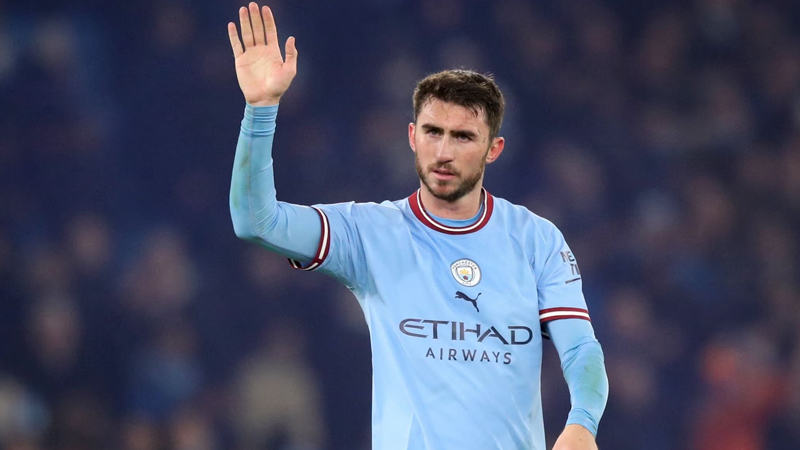
Aymeric Laporte’s absence from the French national team remains one of the most discussed topics in modern European football.
Despite being a cornerstone of Manchester City’s domestic dominance for years, the left-footed center-back never secured a permanent spot under Didier Deschamps. This tactical and personal disconnect eventually led to a historic nationality switch in 2021.
Today, Laporte is a vital asset for Spain, leaving fans and analysts to wonder how such a world-class talent slipped through the fingers of the French Football Federation. This article examines the complex factors behind his departure.
The Decision That Rocked International Football
The story of why Aymeric Laporte is not playing for France is not a simple tale of injury or lack of form; it is a narrative of strategic oversight and a shifting sense of national identity.
Although he represented France across multiple youth levels, Laporte never made a competitive senior appearance for the French first team.
This specific lack of competitive minutes created a rare opportunity under FIFA eligibility rules, allowing one of the world’s premier defenders to reconsider his international future when it became clear he was not in Deschamps’ plans.
The “Deschamps” Factor: A Personal and Professional Rift
The most immediate answer to the question of Laporte’s absence lies in his relationship with French head coach Didier Deschamps. Even when Laporte was considered one of the best left-footed center-backs globally, he was consistently overlooked for selection.
Communication and Relationship Breakdowns
Laporte later confirmed that a strained personal relationship with Deschamps significantly influenced his departure from the French setup.
While the coach often cited tactical preferences, the lack of communication between the two became a point of public interest.
Reports from French media and youth coaches further complicated the situation, suggesting that Laporte was perceived as a “loner” who struggled to integrate with the social dynamics of the French squad.
The Impact of Squad Integration Rumors
The perception of Laporte as an outsider within the French camp likely compounded his exclusion. In a national team environment where chemistry is as vital as talent, these rumors—whether entirely accurate or not—provided a convenient justification for his continued omission.
This friction eventually made the prospect of playing for another nation more attractive, especially as other opportunities began to materialize south of the border.
An Overwhelming Depth of Talent in the French Squad
While personal friction played a part, the sheer volume of defensive talent available to France during Laporte’s peak years cannot be ignored. During the period between 2016 and 2021, France boasted what many considered the deepest pool of center-backs in football history.
| Player | Profile | Key Status During Laporte’s Peak |
|---|---|---|
| Raphaël Varane | Right-footed | World Cup Winner and Real Madrid Mainstay |
| Samuel Umtiti | Left-footed | Vital starter during the 2018 World Cup |
| Presnel Kimpembe | Left-footed | Key PSG defender and Deschamps favorite |
| Lucas Hernandez | Left-footed | Versatile defender capable of playing LB or CB |
Deschamps’ preference for this specific group meant that even a player of Laporte’s caliber found himself as the fifth or sixth choice on the depth chart.
The competition was so fierce that other talented players were also forced to consider their international options, leading to the phrase “France has that many good players they’re turning Spanish.”
The Spanish Connection: A Strategic and Cultural Shift
While France remained stagnant in their approach to Laporte, the Royal Spanish Football Federation (RFEF) was proactive. Spain’s pursuit of the defender was not a sudden impulse but a long-term strategy that recognized both his talent and his deep ties to Spanish culture.
Basque Heritage and Residency
Laporte’s connection to Spain is rooted in his time at Athletic Bilbao. He qualified for Spanish citizenship through his Basque heritage and an eight-year residency in the country, having moved there at the age of 16.
This period was transformative; he lived in Spain during his most formative professional years, from 16 to 23, and developed close friendships with Spanish teammates.
The Persistence of Luis Enrique
The final push for the switch came from former Spain coach Luis Enrique. Unlike Deschamps, Enrique saw Laporte as a perfect fit for his possession-based system.
Enrique personally convinced Laporte to make the switch ahead of Euro 2020, offering him the one thing France would not: a guaranteed role as a defensive leader.
FIFA Ratification and the Legal Reality
The transition from a French youth international to a Spanish senior international required rigorous legal oversight. In May 2021, FIFA officially ratified Laporte’s switch of international allegiance.
This ratification was possible because Laporte had not played a competitive senior match for France. While he had been called up to the senior squad previously, he remained on the bench, which, under FIFA’s updated statutes, allowed him to change national teams.
The announcement was met with a mix of surprise and inevitability in the football world, as fans recognized that a defender of his quality “absolutely deserves to play at the highest level of international football.”
Cultural Identity: Navigating a Dual Heritage
One of the most complex aspects of Laporte’s decision involves the debate over national identity. Critics argued that the move was purely a “sporting decision” and lacked emotional weight. However, the reality of being a “France-born Basque” presents a more nuanced picture.
The Fluidity of Basque Identity
For many people in the Basque region, which spans the border between France and Spain, identity is not always tied strictly to a single nation-state. Laporte himself addressed this complexity, stating that he feels “both” French and Spanish.
Having spent a decade in Spain, paying Spanish taxes and speaking the language fluently, his connection to the country is more than just a matter of convenience.
Addressing the Critics
Some fans expressed concern that switching nationalities for career benefits should not be allowed. Conversely, others pointed out that Laporte’s long-term residency and cultural integration made him as Spanish as any other citizen.
In his own words, he noted that people who focus too much on the “feelings” aspect often have other agendas, whereas he is simply happy with his choice.
The Outcome: Success with La Roja
Ultimately, the decision to play for Spain has been vindicated by success on the pitch. Laporte transitioned seamlessly into the Spanish backline, often pairing with other Manchester City teammates like Eric Garcia or Rodri, with whom he already had strong chemistry.
His presence provided Spain with a “class defender” who excelled in building play from the back—a trait that was highly valued by the Spanish coaching staff but seemingly undervalued by Deschamps.
This integration culminated in Laporte helping Spain win the European Championship, a feat that solidified his status as a national hero in his adopted country and perhaps left some in the French camp wondering what might have been.
Frequently Asked Questions
Why didn’t Laporte play for France earlier?
Despite several call-ups, Laporte was never given a competitive minute by Didier Deschamps, who preferred other defenders like Varane and Kimpembe.
How did he qualify for Spain?
Laporte qualified via his Basque heritage and eight years of residency while playing for Athletic Bilbao.
When was the switch made official?
FIFA ratified the switch in May 2021, just in time for him to participate in the European Championships.
Does he regret the decision?
No. Laporte has stated he is happy and feels a connection to both nations, viewing his choice as a positive step for his career and personal life.
Conclusion: A Modern Footballing Paradigm
The case of Aymeric Laporte highlights the evolving nature of international football in a globalized world. It serves as a reminder that talent must be nurtured and valued; otherwise, it will find a home elsewhere.
France’s loss was undoubtedly Spain’s gain, as La Roja secured a world-class defender who fit their philosophy perfectly. While the debate over “sporting pragmatism” versus “national pride” may continue among fans, Laporte’s success with Spain has largely silenced his detractors.
He remains a prime example of how FIFA’s eligibility rules can provide a second chance for elite players who find themselves at a career crossroads due to coaching preferences or squad depth.