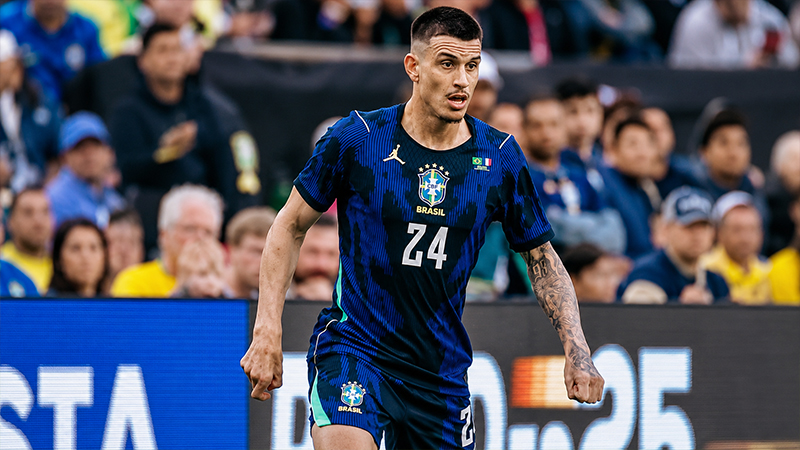
In the professional football landscape, the origins and international allegiances of players often become a significant point of interest for fans and analysts.
One such individual is the professional defender Roger Ibañez. Understanding his background provides clarity on his career trajectory and his role in international football.
The Origins of Roger Ibañez
Roger Ibañez is a Brazilian citizen. His identity as a Brazilian is foundational to his professional career and is a primary factor in his eligibility for international competitions.
While many modern footballers possess multi-faceted backgrounds due to migration or family history, Ibañez is fundamentally identified with the South American nation.
Birthplace: Canela, Brazil
To understand the roots of his nationality, one must look at his place of birth. Roger Ibañez was born in Canela, Brazil. Canela is a city located in the state of Rio Grande do Sul.
This region is known for a distinct cultural identity within Brazil and has produced various notable athletes over the decades.
Being born on Brazilian soil grants him jus soli citizenship, which is the standard legal principle in the country. This birthright established his initial and primary legal connection to the nation, shaping his early development within the Brazilian football infrastructure.
International Representation: The Brazil National Team
The most visible confirmation of an athlete’s nationality in football is the team they represent on the global stage. Roger Ibañez represents the Brazil national team.
Selection for a national squad is a rigorous process that requires not only high-level athletic performance but also definitive legal eligibility according to FIFA regulations.
By playing for Brazil, Ibañez aligns himself with one of the most recognized footballing nations in history. His participation in the national team setup confirms that he has committed to the country of his birth for his international career.
The Significance of the Rio Grande do Sul Region
The state of Rio Grande do Sul, where Canela is situated, plays a specific role in the Brazilian football ecosystem.
Players from this region are often associated with a particular style of play that emphasises physical strength and tactical discipline, alongside the traditional technical skills expected of Brazilian footballers.
Canela itself is part of the Serra Gaúcha, a mountainous area. The environment and local sports culture in this part of Brazil contribute to the development of young athletes. For Ibañez, growing up in this environment provided the initial platform for his entry into professional sports.
Understanding the Nationality Question in Modern Football
In contemporary sports, questions regarding a player’s nationality often arise when they move to European leagues.
Many Brazilian players hold dual citizenship, frequently obtaining European passports (such as Italian or Spanish) through ancestry to facilitate easier registration within European clubs.
In the case of Roger Ibañez, while there has been discussion regarding his eligibility for other nations due to his lineage—specifically his mother’s heritage—his decision to represent Brazil at the senior level solidifies his status as a Brazilian international.
Under current FIFA rules, once a player represents a nation in a competitive senior match, their international allegiance is generally fixed, barring specific exceptional circumstances.
Career Trajectory and National Identity
The professional journey of Roger Ibañez has taken him from local Brazilian clubs to the highest levels of European football. His time at clubs such as Fluminense provided the Brazilian foundation for his defensive style.
When he transitioned to Italy to play for Atalanta and later Roma, his nationality remained a key part of his professional profile.
Defenders from Brazil often face a unique set of expectations. While Brazil is historically famous for its attacking talent, the nation has also produced world-class central defenders.
Ibañez carries this tradition forward, blending Brazilian technical ability with the tactical rigors of Italian football (Serie A), where he spent a significant portion of his career.
Participation in International Tournaments
Representing the “Seleção” (the Brazilian national team) is considered a pinnacle achievement for any Brazilian footballer. Ibañez’s involvement in the national team includes call-ups for friendlies and competitive matches.
His integration into the squad allows him to play alongside some of the most prominent athletes in the world, further cementing his status as a key figure in Brazilian sports.
Impact of Nationality on Club Transfers
A player’s nationality can also influence their market value and the logistics of club transfers. In leagues with “non-EU” player quotas, a Brazilian player’s status is a critical consideration for scouts and managers.
Throughout his career moves, including his move to Al-Ahli in the Saudi Pro League, his identity as a Brazilian international has been a defining characteristic of his professional resume.
Conclusion
Roger Ibañez’s nationality is a central element of his identity as a professional athlete. Born in Canela, he is a product of the Brazilian football system and continues to represent his country on the international stage.
His career serves as a modern example of how a player can maintain a strong national identity while competing in diverse leagues across the globe.