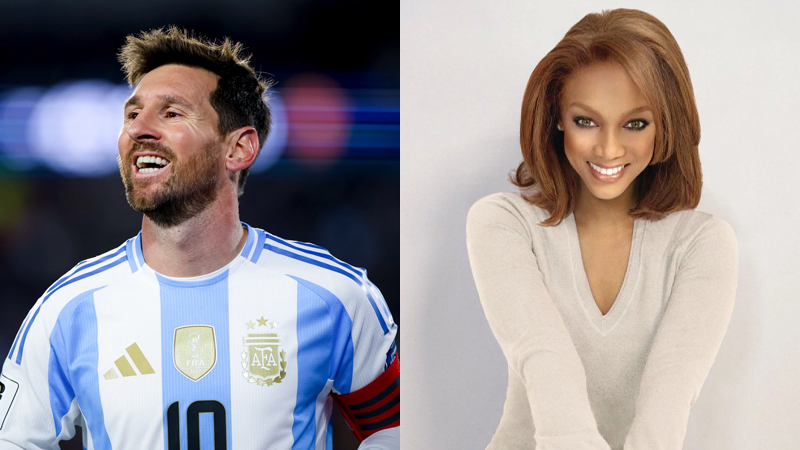
The current digital landscape is defined by unexpected intersections. In 2025 and 2026, an unusual pairing has captured the attention of millions across global platforms: the “Digital Convergence” of football icon Lionel Messi and media mogul Tyra Banks.
While these two figures dominate entirely different sectors—global sports and the high-fashion media industry—their names are increasingly linked in the digital sphere.
This phenomenon serves as a masterclass in how modern algorithms, fan-generated content, and social media trends can create a perceived reality that exists independently of physical world interactions.
Understanding the Audience and Search Intent
To analyze this intersection, we must first look at the users driving the interest. The search volume surrounding these two icons is not accidental; it is a byproduct of specific digital behaviors.
| User Persona | Search Intent | Primary Pain Point |
|---|---|---|
| The Trend Follower | Discovering the origin of a funny Reel or TikTok video. | Confusion over why Messi and Banks are appearing in the same feed. |
| The Super-Fan | Verifying if a formal collaboration or partnership has been signed. | Fear of missing out (FOMO) on major celebrity news. |
| The Content Creator | Searching for the specific “POV” templates used in viral mashups. | Difficulty finding high-quality assets for Messi/Banks memes. |
| The Digital Strategist | Analyzing how disparate hashtags influence algorithmic grouping. | Understanding the mechanics of “cross-industry” digital trends. |
The primary driver here is curiosity. Users encounter a “POV” (Point of View) scenario on Instagram or TikTok, often featuring Tyra Banks’ coaching persona from America’s Next Top Model juxtaposed with football statistics or Messi’s career highlights.
This creates a “loop” where the search for one celebrity begins to trigger recommendations for the other.
The Phenomenon: Defining “Digital Convergence”
The term “Digital Convergence” in this context does not refer to a business merger or a joint venture. Instead, it describes an algorithmic event where two distinct entities are grouped together by fan-generated comedy and hashtag mashups.
In 2025 and 2026, various fan accounts and popular Reels have increasingly linked their names. This is largely due to the way social media platforms like Instagram and TikTok categorize content.
When a specific influencer, such as Alyssa Brook Lee, or a fan account creates a “mashup” that goes viral, the algorithm begins to associate the metadata of both celebrities.
The Role of “POV” Content
A significant portion of this association stems from viral scenarios. For example, “POV: You told Tyra Banks…” videos often use her famous televised critiques to humorously react to football news or Messi’s performance on the pitch.
These videos are categorized under both “Sports” and “Entertainment,” forcing the two icons into the same digital neighborhood.
Fact-Checking the Connection: Bridging the Gap
For those seeking professional clarity, the reality is straightforward: Lionel Messi and Tyra Banks are not known to have a direct, professional connection. There are no verified reports of a formal partnership, a shared business venture, or even a personal friendship.
The “link” between them is best described as trending internet content rather than a real-life association. This is a crucial distinction for brands and fans to understand.
In the modern era, a “digital partnership” can exist in the collective consciousness of the internet without a single contract being signed in the physical world.
| Feature | Reality Check |
|---|---|
| Professional Partnership | None documented. |
| Personal Friendship | No evidence of a direct relationship. |
| Shared Media Appearances | Primarily limited to fan-made mashups and Reels. |
| Algorithmic Link | High; frequently grouped in hashtag feeds and “For You” pages. |
The Power of the Algorithmic Mashup
Why does the internet insist on pairing a legendary Argentine footballer with the creator of SMINT? The answer lies in the evolution of the “mashup” culture.
- Semantic Clustering: Search engines and social algorithms group “Messi” and “Banks” because they both represent “Peak Excellence” in their respective fields. When fans create content comparing their “Greatest of All Time” (GOAT) status, the names become semantically linked.
- Hashtag Navigation: Users browsing similar hashtag feeds often find content for both icons appearing back-to-back. This creates a psychological association that makes the pairing feel more “real” than it actually is.
- Global Relevance: Both Messi and Banks are global household names. Their appeal transcends borders, making them the perfect “building blocks” for creators looking to maximize reach through broad, cross-demographic content.
Traditional Insights vs. Digital Reality
In the past, celebrity associations were managed by public relations teams and formal press releases. Today, the narrative is often taken out of the hands of the individuals.
The Messi-Banks trend illustrates how fan-generated comedy has the power to rewrite celebrity narratives.
When an influencer like Alyssa Brook Lee or a dedicated fan account gains traction with a specific joke or format, that format becomes the “lens” through which millions of people view these icons.
This shift represents a democratization of branding. A world-class athlete and a fashion mogul are brought together not by a board of directors, but by the creativity of a digital audience that finds humor and engagement in the unexpected.
Managing Digital Associations in the 2020s
For high-level organizations and strategists, the Messi-Banks phenomenon provides several key takeaways regarding digital presence and audience engagement.
- Monitor “Phantom” Associations: Brands must be aware that they can be linked to other entities entirely by accident through algorithmic grouping.
- Embrace the “POV” Format: The success of the “[POV: You told Tyra Banks…]” format shows that audiences crave relatable, persona-driven storytelling.
- The Gap is an Opportunity: While there is no real-life connection, the high search volume presents an opportunity for lighthearted engagement or “meta” commentary by official channels.
Frequently Asked Questions
Are Lionel Messi and Tyra Banks working on a project together?
No. There is no evidence of any formal partnership or professional collaboration between the two.
Why do I see them both in my Instagram feed?
This is likely due to “hashtag mashups” and trending “POV” videos where fan accounts use their names together to capture the attention of the algorithm.
Did Alyssa Brook Lee start this trend?
Influencers like Alyssa Brook Lee are mentioned in connection with this trend, as they often create the type of viral social media content that links diverse celebrities in the minds of the audience.
Is there a video of them meeting?
Any videos showing them together are likely “fan-generated comedy content” or edited mashups rather than an actual physical meeting.
Conclusion: The Future of Celebrity Connectivity
The “Digital Convergence” of Lionel Messi and Tyra Banks is a fascinating case study in modern internet culture. It highlights a world where the physical distance between two people is irrelevant if the algorithm decides they belong together.
As we move further into 2026, we should expect to see more of these “phantom partnerships.” These trends are not driven by reality, but by the powerful combination of fan creativity and algorithmic logic.
While Messi continues to dominate the pitch and Banks continues to influence the world of media and fashion, their names will likely remain linked in the digital archives as a testament to the unpredictable nature of viral content.